
Introduction
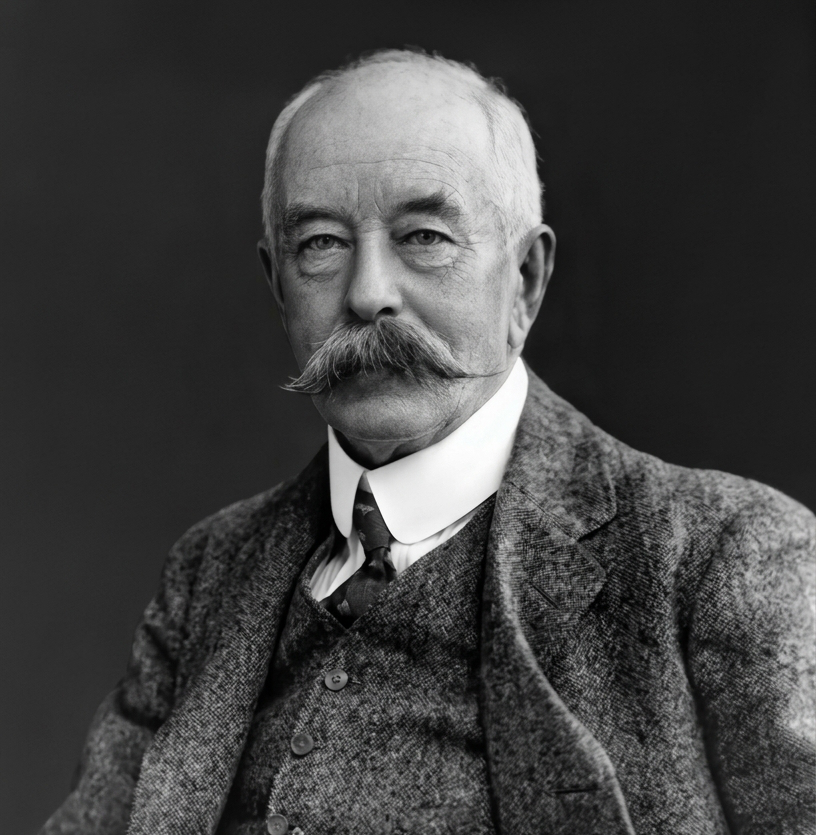
William Pitt was born in 1850 and was a career Army officer, retiring as a Colonel in the Royal Engineers. He moved to Fairseat in 1914 and for the next 19 years was a prominent Parish figure. Sadly, two of his three children died in WW1. He died in 1933 and is buried in St Mary’s churchyard.
Early Life
William Pitt was born in 1850 in Bath, Somerset. His parents were Selina nee Littlewood, and Robert Pitt. William’s father was an engineer who, in 1855, co-founded Stothert & Pitt of Bath, which became a world-famous heavy engineering and crane-manufacturing company and, in later years, the largest employer in Bath. In the 1871 census, Robert is recorded as employing 16 men and being a landowner. William had a younger brother, Walter, and a younger sister, Jessie, who died as an infant.
William joined the Army on 23rd July 1870, aged 20, and by the following year he was a Lieutenant in the Royal Engineers stationed at the School of Military Engineering in Brompton Barracks, Chatham, Kent. Eight years later, in 1879, he married Mary ‘Minnie’ James Brindley, aged 21, in Islington whilst still a Lieutenant and still at Chatham Barracks.
Over the next nine years, William and Minnie had three children, William born in 1880, Mary ‘May’ in 1882 and James in 1888. Although Colonel Pitt’s detailed service record has not been found, it is clear that he served in India in the 1880s, as both his sons were born there.
He had attained senior rank long before settling in Fairseat. In 1891 he was a Major living in Bath, and The London Gazette of 2 October 1900 records that he had completed five years as a regimental lieutenant-colonel in the Royal Engineers in Aldershot.
In 1901 he and his family were living at Blenheim Barracks, Aldershot and, around this time, aged 51, he was retained as a supernumerary, already holding the brevet rank of Colonel. In 1906, aged 56, he retired from his position as Chief Engineer, Eastern Command, and was placed on a pension of half-pay.
Note: A brevet rank is a higher military rank awarded to an officer, usually in recognition of distinguished service, without automatically bringing the pay, command or authority of that rank.
In 1911, five years after his retirement, he and his family were living at Enham House in Knights Enham just outside Andover. This is about 10 miles from the Royal Engineers’ main base at Tidworth. He had joined up in 1870, aged 20 and retired 36 years later as a Colonel (one rank below a Brigadier). As a Colonel, he had broad responsibilities such as overseeing engineering projects and programmes, planning and training across several units.
Fairseat
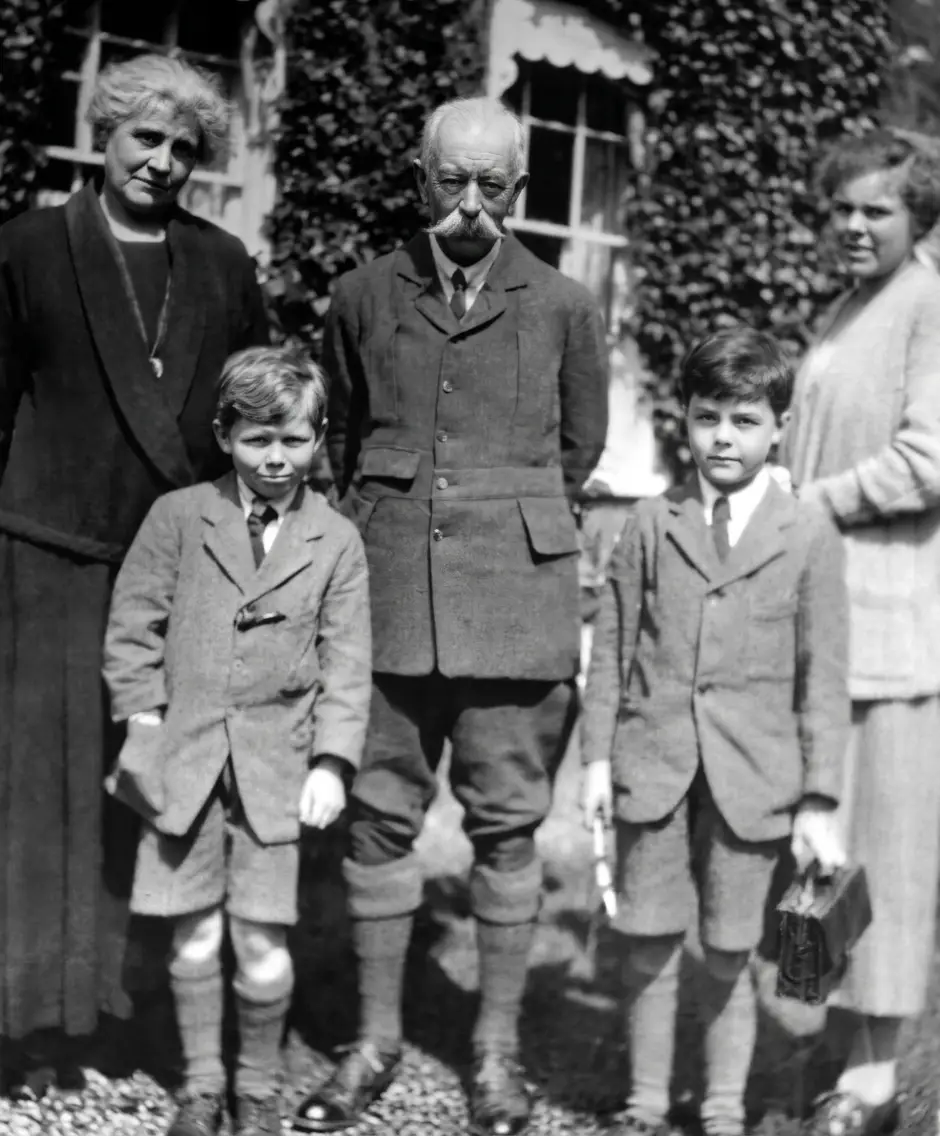
The Pitts moved to Fairseat House after buying the property on 16th June 1914. This is a large detached house which had previously housed Hannah Grant’s school for young ladies and later the Kemball family.
Included in his estate purchase was a former coachman’s cottage (now Fairseat Cottage) that functioned as the village post office, so Colonel Pitt acted as the landlord for this vital local service. Under his ownership, the building also housed the village’s manual telephone exchange starting in December 1925, before it moved to new premises around 1930. The Pitts’ grandson, Dr Peter Pitt, remembered his grandmother standing outside the Post Office with her ‘everyday’ parasol.
Colonel Pitt immediately became involved in village life, but his military experience was called upon almost straight away when, a year later in May 1915, aged 65, he was recalled to military service. There is a letter in the village archive dated 1st January 1915 in which Colonel Pitt is writing to a person unknown, confirming the setting up of a local Emergency Sub-Committee to organise emergency arrangements in Stansted Parish during WW1.
Colonel Pitt himself was the Parish Representative on the Committee, and other local people were in charge of Special Constables, the Organisation of Labour, the Improvement of Stock and dealing with the ‘Fugitive Population’. There is a note that Stansted had already agreed to accommodate 705 ‘wayfarers’. Soon after this letter was written, Colonel Pitt was recalled to military service, and he resigned as Chairman of the Stansted Parochial Emergency Committee. He was replaced by J. Stewart Black of Plaxdale House, Stansted (now Plaxdale Green farmhouse).
At the end of WW1 Colonel Pitt was made a Companion of the Order of St. Michael and St. George. The 1918 honours list named him for his valuable services connected with the war but, unfortunately, the entry does not specify the work for which he was honoured.
The deaths of his sons
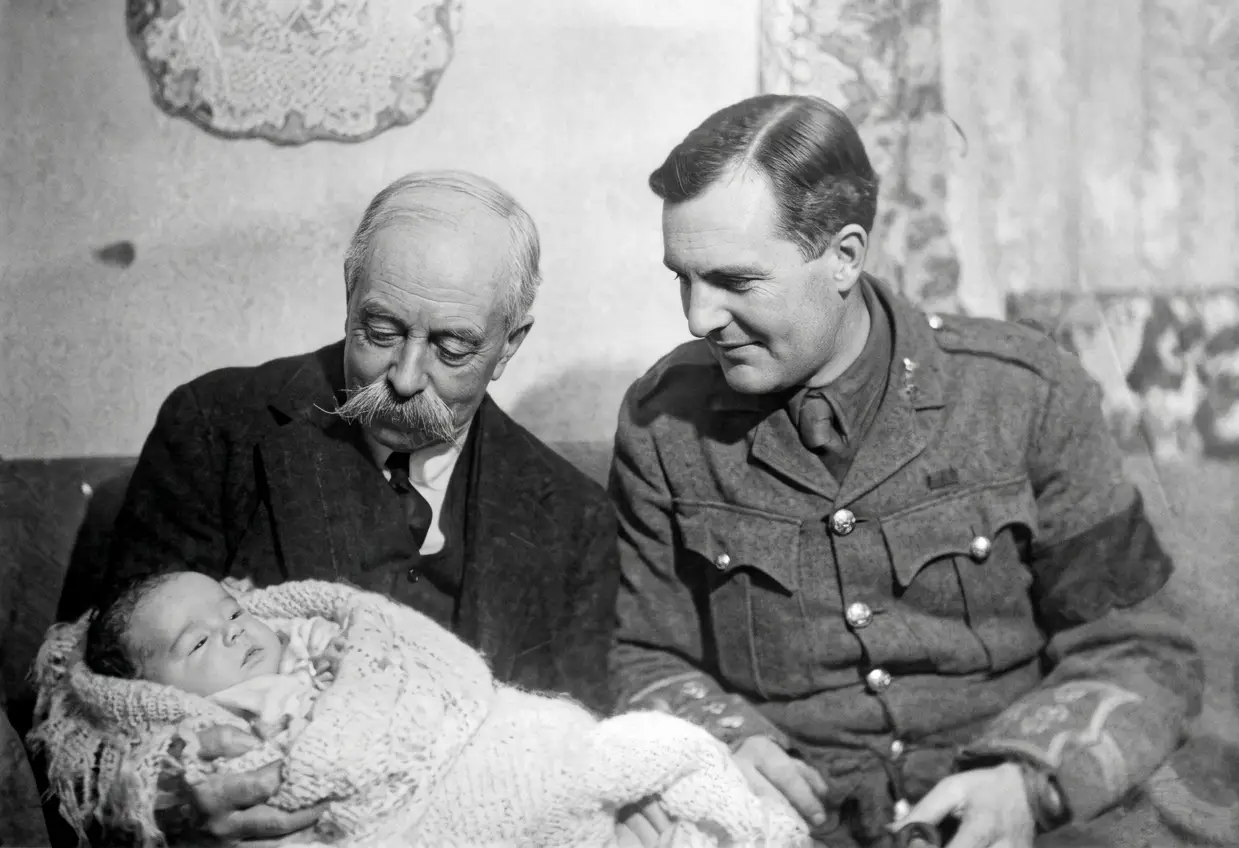
Within two years of settling at Fairseat, William and Minnie Pitt had lost both their sons in the war. The youngest son, James, was a lieutenant and adjutant in the 1st Dorsetshire Regiment and had been one of the first UK soldiers to land in France. He was killed on 13 October 1914, aged 26. He was unmarried.
His elder brother, William Neville, was a major and was second-in-command of the 2nd Lincolnshire Regiment when he died of wounds on 20 August 1916, aged 35. William left a widow, Lucy, and two young sons; one of these, Peter, would later provide the Society with his recollections of Fairseat.
Note: Biographies of James Pitt and William Pitt are available under the ‘World War I’ section, accessible via the ‘People’ option in the main website menu.
Church support
The Pitts were active supporters of St Mary’s Church and made annual subscriptions as well as giving freely of their time. In 1918, for instance, their combined contribution of £7 3s was a substantial item in the list, alongside the subscriptions of Sir Philip Waterlow and other Parishioners.
Colonel and Mrs Pitt took part in Parish works of commemoration, including that for their own two sons. In March 1919 both were named on the committee appointed to arrange a memorial tablet in St Mary’s Church. The plans also included a cross outside the church and a tablet on the wall of Stansted School, although these two proposals were not put into place.
Colonel Pitt unveiled the church memorial on 10th March 1920. It is an alabaster tablet outlined in green marble, recording the names of fourteen men of the Parish who had fallen in the war, including the Pitts’ sons.
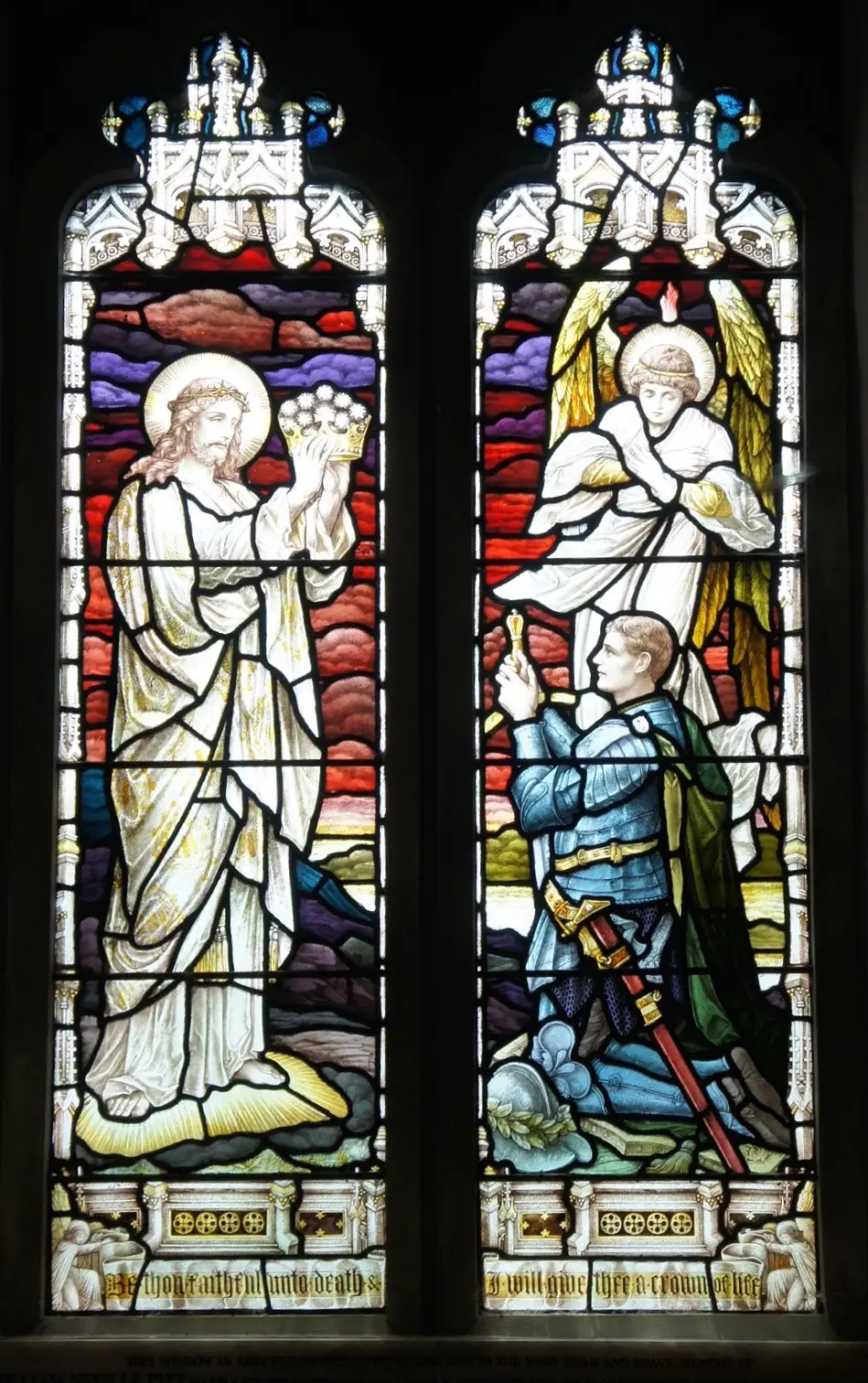
Colonel Pitt’s sons, James and William, are also commemorated through a stained glass window on the east wall of St Mary’s Church, dedicated to their memory. A marble plaque below the window contains the following dedication:
This window is erected to the glory of God and to the most dear and brave memory of William Neville Pitt, Major and second in command, 2nd Lincoln Regiment, who died of wounds in France 20 August 1916, and of James Maxwell Pitt, Lieutenant and adjutant, 1st Dorset Regiment, who was killed in action in France 13 October 1914. The only surviving sons of Colonel William Pitt, R.E. and Mary James, his wife, of Fairseat House.
Three years later, the Stansted outdoor War Memorial Statue gave their loss and the Parish’s losses in a still more public setting. Sir Gerald Hohler provided the site, while his brother Sir Thomas helped obtain the bronze palm-bearer statue from Hungary. The dedication and unveiling took place at noon on Sunday 15 July 1923, with Colonel and Mrs Pitt performing the unveiling together.
Note: Further information on the Stansted War Memorial is available in the ‘Landmarks’ section, accessible via the ‘Places’ option in the website main menu.
The family’s connection with the church continued beyond the Colonel’s lifetime. The vestry inventory records a sanctuary chain given to the church by Mrs Pitt, and a silver-plated communion set given in her memory.
Later years in Fairseat
Colonel Pitt was active on the Parish Council and was its Chair and Treasurer until shortly before his death in 1933. He was succeeded as Chair and Treasurer by Harold Hunt from Goodman’s Farm, Stansted.
Peter Pitt was Colonel Pitt’s grandson and in 1982 wrote a letter to Mrs Grisell Pasteur about his memories of his grandparents. He remembered his grandfather as rather reserved, but capable of entertaining the family with mildly risqué stories calculated to annoy his wife. His account is affectionate, sharp and sometimes irreverent.
The family’s 1914 Studebaker car was another memorable feature of village life. Peter recalled that it lasted twenty years and never exceeded 25 miles an hour. A wealthy cousin eventually supplied a replacement because he could no longer bear the old car. Peter also remembered milk arriving daily from Mr and Mrs Burgess’s nearby farm, followed by a family commotion when it emerged that no bill had been sent for eight years.
One particularly unusual recollection concerned Mrs Drummond, a neighbour at Court House who, Peter said, left money for the maintenance of her two dogs after her death. Her former butler, Slade, collected payments from Colonel Pitt. After many years had passed, Mrs Pitt demanded that the dogs be produced. Slade duly arrived with two dogs, but Peter doubted whether anyone could establish that they were the original animals.
A surviving property document supplies a firmer basis for the Colonel’s involvement with this neighbour. A conveyance dated 10 September 1926 identifies him and James Wilfred Plummer as the Executors of Mrs Drummond’s estate. As Executors, they sold her property, then called Fairseat Cottage and formerly Fairseat Court, to Beresford Charles Scott for £1,650. It would have been at this time that the old Post Office needed to find new premises. The dog story remains a family recollection, but the conveyance independently supports his responsibility for administering her estate.
Peter also recalled his grandmother organising opposition to the expense of the Church taking responsibility for Fairseat’s chapel of ease after Sir Philip Waterlow’s death. In his telling, she carefully arranged different villagers to arrive at set times and to sit in separate rooms so that their varying levels of perceived status were preserved. The whole thing descended into confusion when visitors arrived at the wrong times and stayed too long.
Colonel Pitt died in 1933, and in 1935 his wife sold Fairseat House to Hugh and Grisell Pasteur. Mrs Pitt moved to Fairseat Lodge and remained there until her death in 1949. Husband and wife are commemorated together in St Mary’s churchyard. Their remaining child, May, never married, and when she died in 1956, she was living at Quince Cottage, Wrotham.