
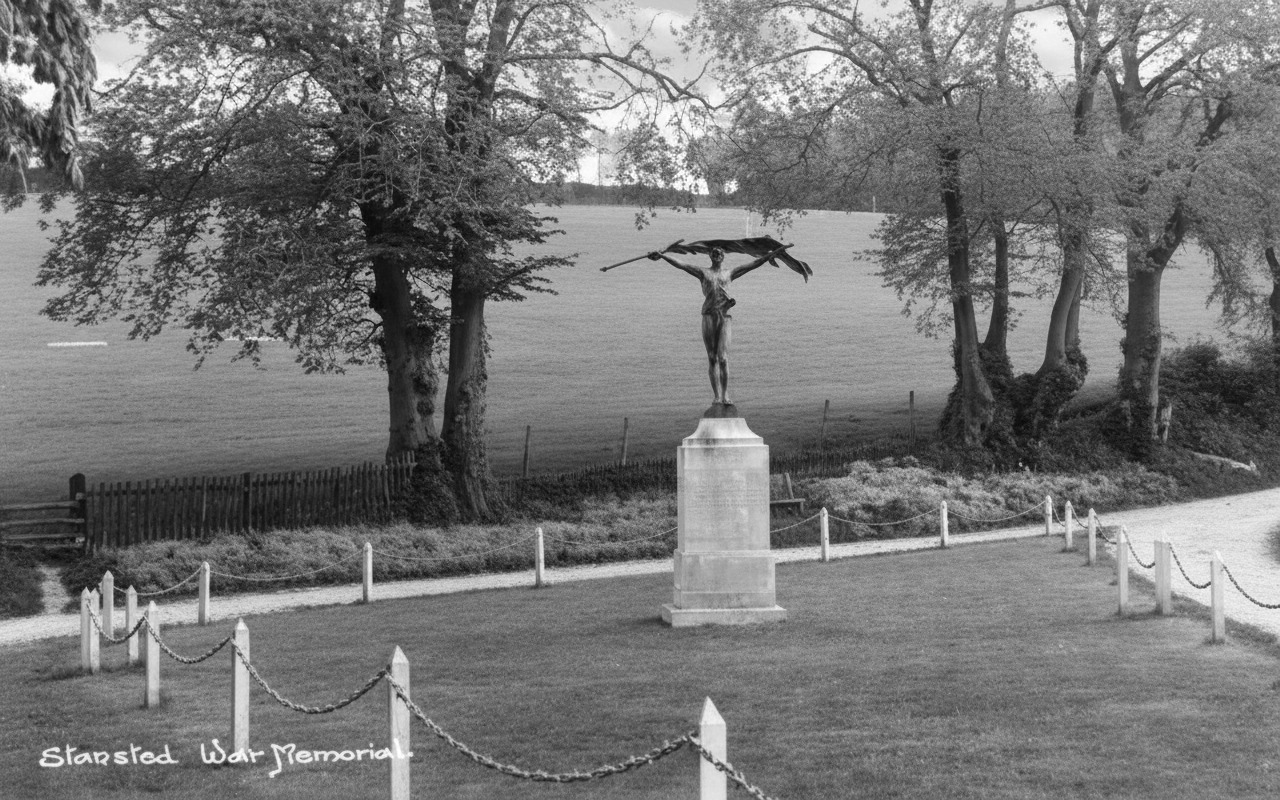
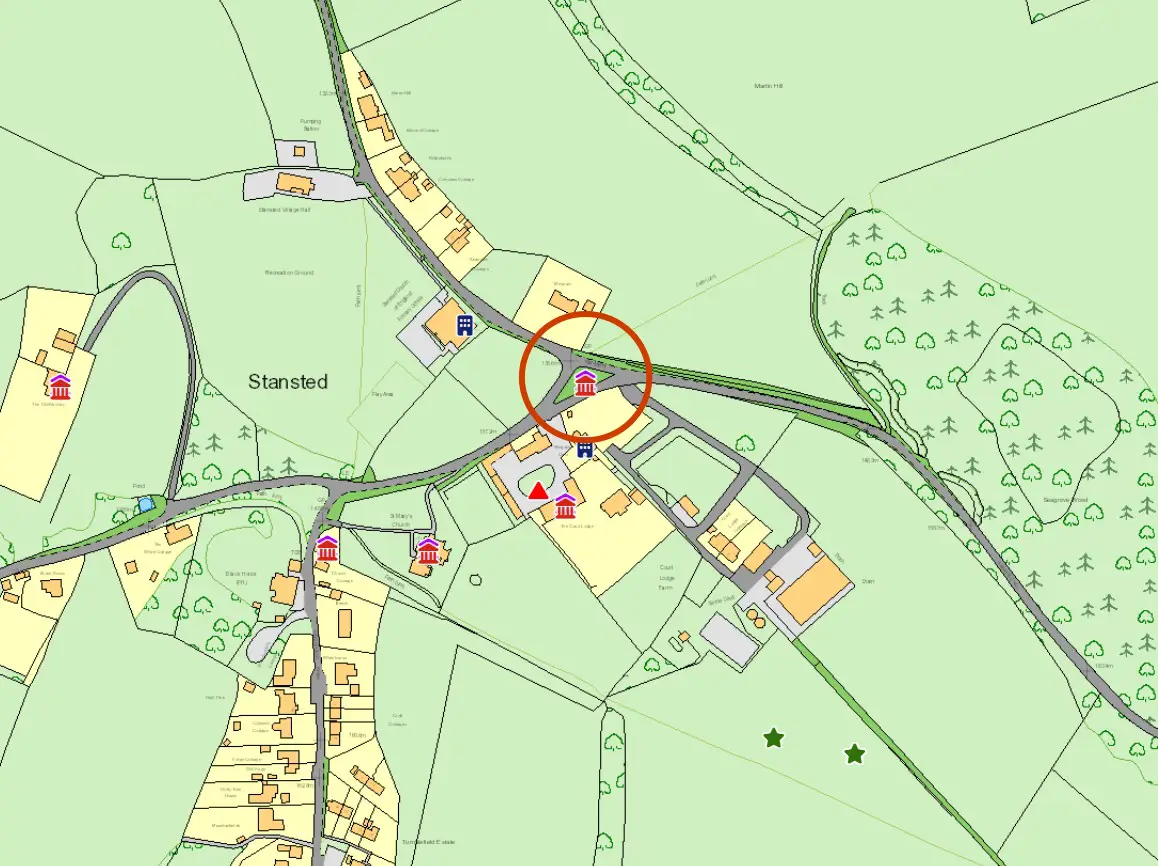
 As World War One drew to a close, people across Great Britain reflected on the need for a permanent memorial to those who sadly died. The London Peace Procession in November 1919 featured a temporary wood-and-plaster cenotaph in Whitehall, designed by Sir William Nicholson. By November 1920, it was replaced with the current Portland stone Cenotaph designed by Sir William Lutyens.
Sir Edwin Landseer Lutyens (1869 – 1944) was a British architect known for imaginatively adapting traditional architectural styles to the requirements of his era. He designed many English country houses, war memorials and public buildings. In his biography, the writer Christopher Hussey wrote, “In his lifetime (Lutyens) was widely held to be our greatest architect since Wren if not, as many maintained, his superior”. The architectural historian Gavin Stamp described him as “surely the greatest British architect of the twentieth (or of any other) century”.
Widespread press discussion of commemoration led to the War Memorials Local Authorities’ Powers Act, which received Royal Assent on 18 July 1923. This Act empowered Local Authorities to levy a specified rate in order to construct and maintain local war memorials.
At their March 1919 meeting, Stansted Parish Council decided to commission a memorial tablet, engraved with the names of the fallen, to be attached to the interior east wall of St Mary’s Church. They also planned a cross on the exterior and another tablet on the wall of Stansted School; however, they did not implement these. A subcommittee of Ms Berry, Mr Brown, Mr Debenham, Mrs Milton, Rev. Fisher, Mrs Pitt, Colonel Pitt, Mr Webb, Sir Gerald Hohler and Mr Manley would plan and devise the implementation. The tablet was unveiled on 10 March 1920. It can be seen beneath the east window in St Mary’s Church.
The desire for a more substantial and publicly visible memorial remained, and the Parish Council recorded the conveyance of a parcel of land for this purpose. Sir Gerald Hohler of Court Lodge, Stansted, and his brother Thomas Hohler of nearby Fawkham Manor were instrumental in creating the now well-known War Memorial. Sir Gerald owned a drovers’ pond at the foot of Windmill Hill (now Stansted Hill) and offered it as the proposed site for a memorial statue.
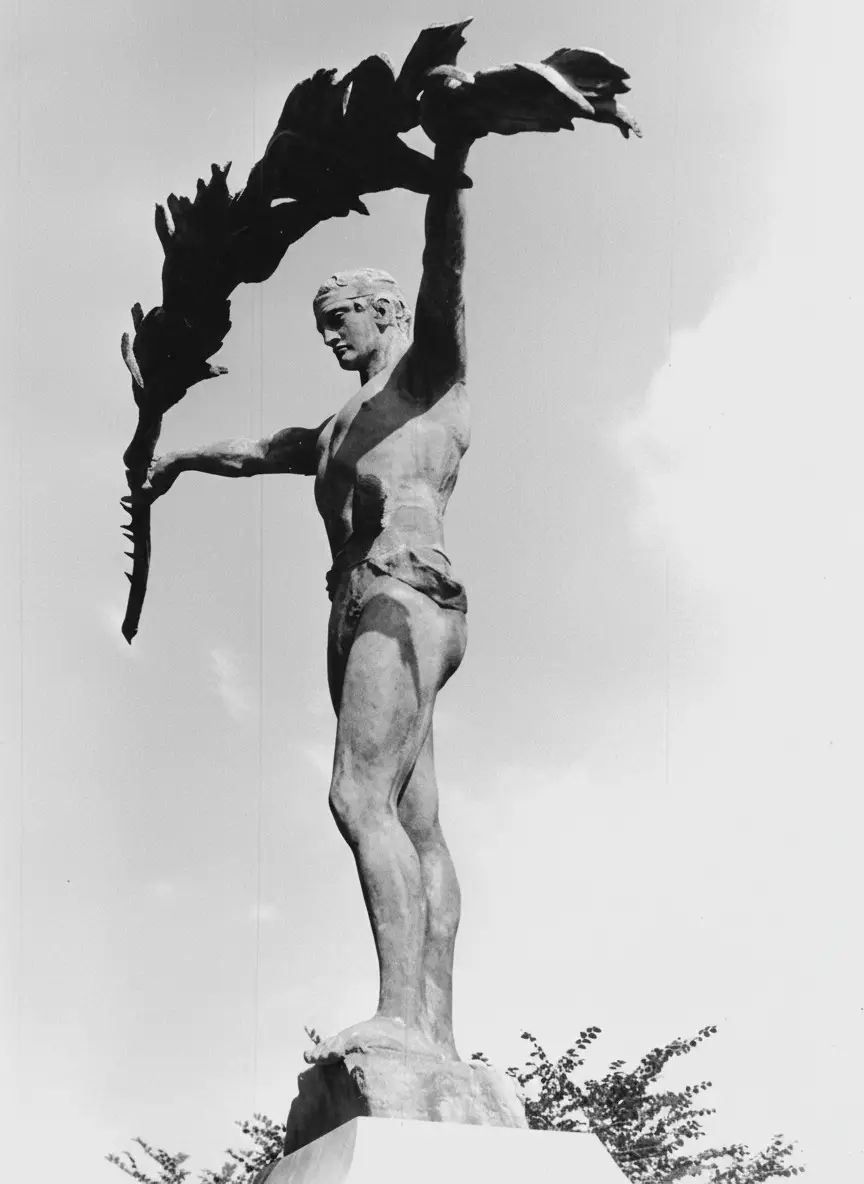
Sir Thomas Hohler, KCMG, CB, JP, Head of the British Legation in Budapest, Hungary, in 1920, was well-connected in the country’s cultural circles. He knew that the sculptor Alajos Stróbl had created a statue of a female palm-bearer in 1898. While Sir Gerald contemplated erecting a memorial, Thomas suggested Strobl could make a modified version with a different head, better suited to the proposed War Memorial.
Alajos Stróbl (1856 – 1926) was an Austro-Hungarian sculptor and artist of Zipser German origin (father Josef Strobl and mother Karolina Vyrostek). His work is characterised by sensitive, realistic modelling, and he became one of Hungary’s most renowned memorial sculptors at the turn of the 20th century.
The well-known foundry ‘Galliés Vignale’ cast the bronze figure in Budapest. Meanwhile, Sir Gerald prepared a square base of Portland stone. As a lasting tribute, the memorial stone was carved with the names of the Great War’s fallen.
Many years later, Dr Peter Pitt recalled an interesting story about the memorial: a few people involved in the planning stage met on site to arrange a wooden mock-up of the pedestal. Sir Gerald Hohler had climbed up and held his umbrella aloft to represent the olive branch associated with the proposed statue. Mrs Drummond happened to drive past and remarked, “Very nice, but did they have to have the statue so like Sir Gerald?”
One hitch before the memorial was erected was delivering the bronze statue from Hungary to Stansted in Essex rather than Stansted in Kent, an event that has repeated itself more than once since then!
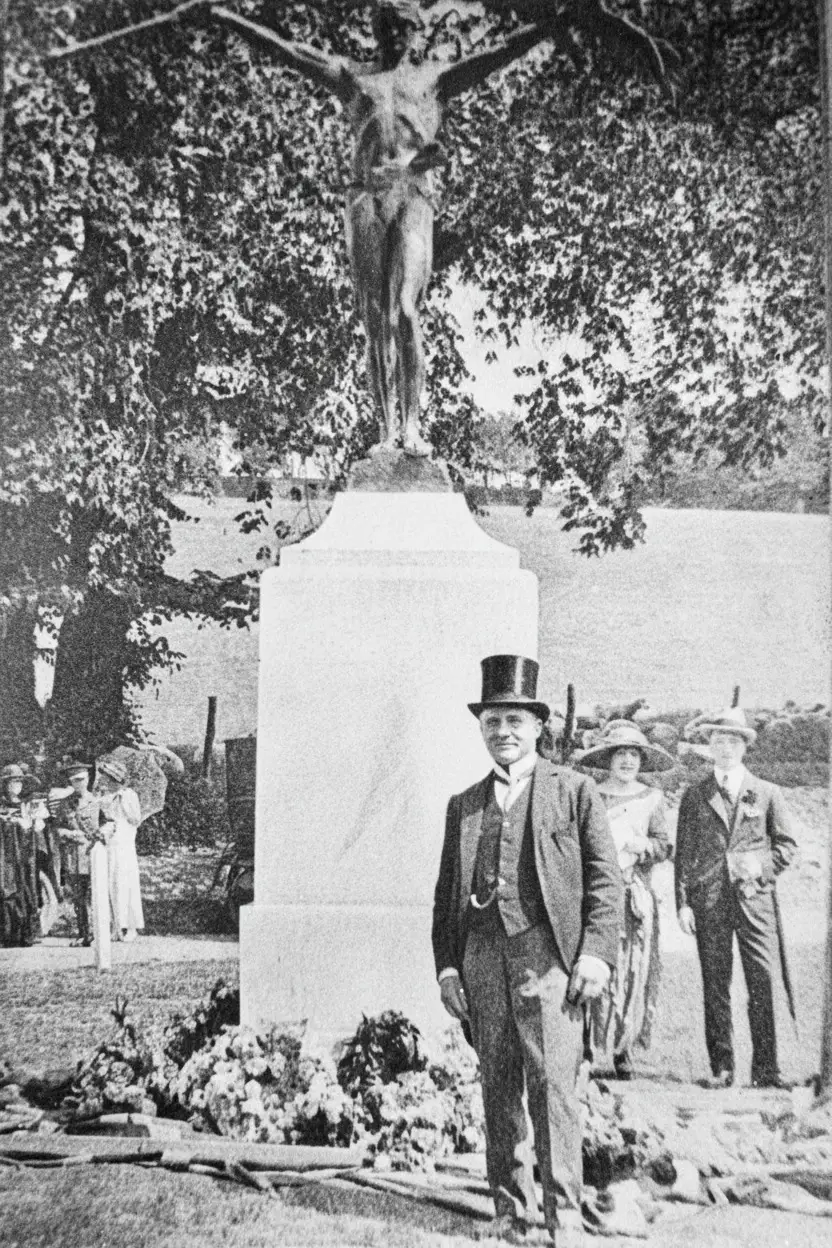
The memorial was unveiled by Colonel and Mrs Pitt from Fairseat House, whose two sons had been killed in action during the War. The sadness and emotion at the ceremony are hard to imagine. It took place on Sunday, July 15th, 1923, and was accompanied by dedications by Dr John Harmer, Bishop of Rochester, and Reverend F. Fisher, Rector of Stansted.
All who saw it immediately valued the bronze statue of a young man bearing a palm bough. Its striking beauty and simplicity resonated with many local people who had served in, or were affected by, the Great War. About a quarter of those who served overseas did not return, which had a significant impact on these small village communities. The statue stands against rolling hills and faces almost directly toward the setting sun, which bathes it in emotive light during summer evenings.
Unusually, the Stansted Memorial lists the names of WWI dead by military rank, then alphabetically. Most war memorials list their dead servicemen alphabetically by surname, with military ranks as secondary information.
LIEUT. COLONEL A.G. KEMBALL C.B., D.S.O. 54TH CANADIANS
MAJOR W.N. PITT 2ND BN LINCOLNSHIRE REGT.
LIEUT. AND ADJUTANT J.M. PITT 1ST BN. DORSET REGT.
LIEUT. G.A. GOODMAN ROYAL AIR FORCE
SERGT. MAJOR A. KIRTON 11TH BN. AUSTRALIAN IMPERIAL FORCE
CO. SERGT. MAJOR J.F. JOHNSON 9TH BN. KINGS ROYAL RIFLE CORPS.
PRIVATE A.T. BETTS ROYAL ARMY SERVICE CORPS.
GUARDSMAN H.T. BLACKMAN 1ST BN. GRENADIER GUARDS
DRIVER F. BOWYER ROYAL ENGINEERS
PRIVATE L.V. BROWN 2ND BN. ROYAL WEST SURREY REGT.
DRIVER V.R. BROWN ROYAL FIELD ARTILLERY
PRIVATE E.C. BURNETT 1ST BN. ROYAL WEST KENT REGT.
PRIVATE L.A. MARTIN 28TH BN. AUSTRALIAN IMPERIAL FORCE
PRIVATE L.A. SOLOMAN POST OFFICE RIFLES
PRIVATE B.R. STREATFIELD 7TH BN. ROYAL WEST KENT REGT.
Note: Further information for each of these servicemen is included under the ‘World Wars’ section of the website, which is accessible from the ‘People’ option in the main menu, or via the following link: WW1 Participants. The ‘History’ section of the website also includes a World War 1 timeline showing the chronology of major battles and information on when and where the fifteen local servicemen died.
The biographies include two sets of brothers from Fairseat (Messrs. Pitt and Brown), a former serviceman who had retired to become a fruit farmer in Canada (Arnold Kemball), one of the last people to die in action in Italy (Gilbert Goodman) and a lad from Australia who had the opportunity to go home but stayed and was killed in Cairo (Alex Kirton).
The Church’s Roll of Honour lists 63 men who served overseas during WW1, including 14 who died. Because Driver Victor Brown did not serve overseas, the Roll of Honour omits his name. However, he became ill whilst in the Army and died shortly after being discharged, and this secured his name on the memorial next to that of his older brother, Lionel. Victor Brown is also the only one of the 15 fatalities from WW1 to be buried in the UK (in St Mary’s churchyard).
In March 1915, to avoid the difficult transportation of war fatalities, the British Government decided that Imperial soldiers should be buried where they had fallen and should remain there. This was highly controversial at the time and led to the establishment of military cemeteries and ultimately to the formation of the Commonwealth War Graves Commission. It follows that the only CWGC headstones to be seen in the UK are of servicemen who died in the UK.
No official method existed for gathering and recording names on memorials. In small villages like Stansted and Fairseat, people probably gathered names by word of mouth, and checking details was manageable. This was much harder in large towns, and many mistakes were made.
Local discretion also determined whether a name appeared on a memorial. As a result, some names on the Stansted memorial are men born in the area who lived there most of their lives, while others have a more distant link. Some names also appear on memorials in other towns and villages.
The poem inscribed on the back (eastern) side of the main memorial plinth is based on ‘Recessional’, a poem by Rudyard Kipling composed in 1897 for Queen Victoria’s Diamond Jubilee.
Sir Gerald had previously donated the Memorial to Stansted Parish Council. On his death in 1934, he bequeathed the Parish Council a strip of land around the memorial to be planted as a garden, along with £300 to be invested for future upkeep.
After World War II, the memorial plinth was updated to include the names of six servicemen who had died during the war.
LIEUT. COLONEL G.C.P. LANCE D.S.O. 7TH SOMERSET LIGHT INFANTRY
WING-COMMANDER C.G. HOHLER ROYAL AIR FORCE
PETTY OFFICER C.K. HOOPER ROYAL NAVY
LEADING STOKER A.W. COLEGATE ROYAL NAVY
PRIVATE E.R. GOULD 8TH BN. THE ROYAL SCOTS REGT.
PILOT OFFICER P.A. NASH ROYAL AIR FORCE
Note: Further information for each of these servicemen is included under the ‘World Wars’ section of the website, which is accessible from the ‘People’ option in the main menu, or via the following link: WW2 Participants.
In October 1964, thieves sadly stole the statue by tearing it from the stone plinth, probably using a lorry and ropes. The local community was understandably outraged. Parish Council Chairman Vivian Walton called the theft “absolutely appalling”, while Colonel Wintle denounced the theft of this “much-loved village landmark”.
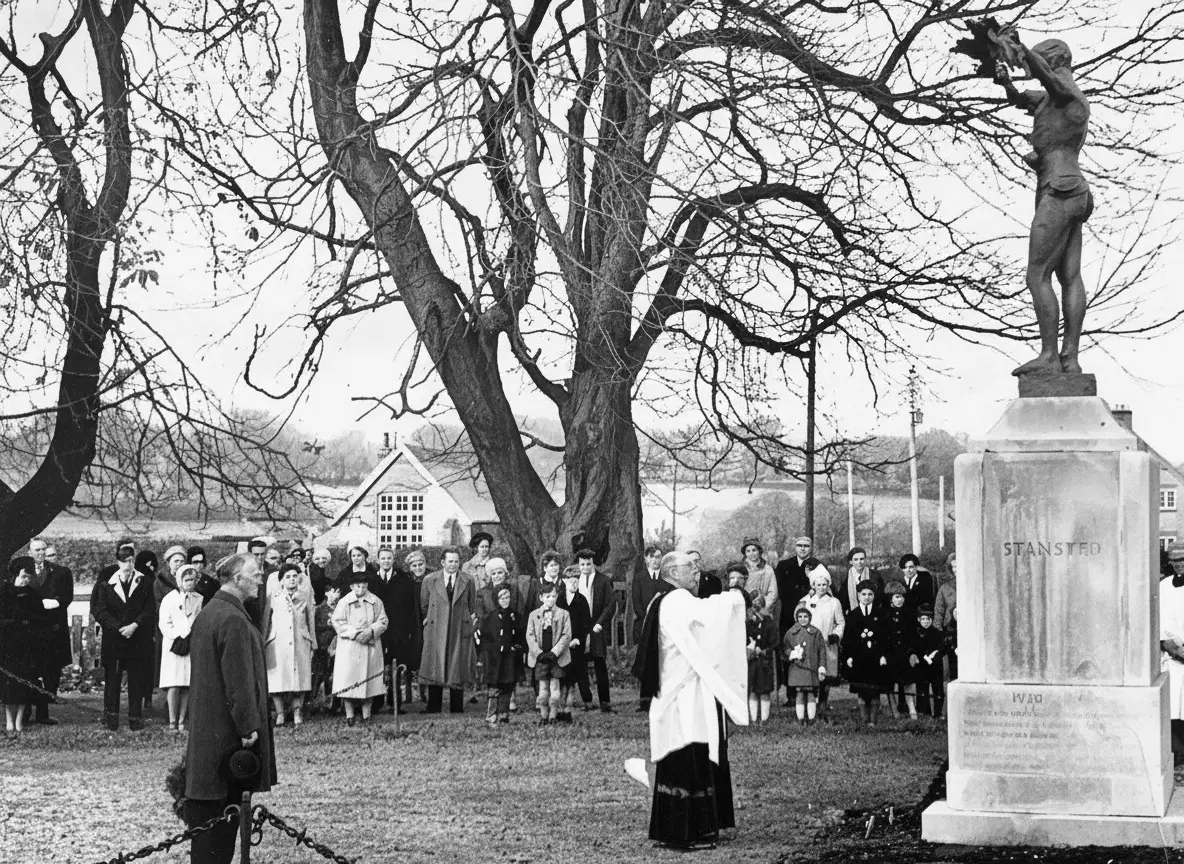
The following article by George Hollingbery was published in a local newspaper:
The old-world village of Stansted, Kent, awoke today seething with anger and bitterness.
In the darkness of night, thieves plundered the village of its most precious and treasured possession, a beautifully sculptured war memorial to the 15 heroes of Stansted who fell in the First World War.
The raiders slowly entered the village at 3 a.m. They trundled their lorry onto the neatly kept grass verge, smashing down the chain-link rail. Then, they pulled down the £3,000 bronze statue of a naked man holding palm leaves from its ten-foot-high white stone plinth, probably using the lorry in the operation.
The village postman was one of the first to discover the raid. Soon, villagers gathered in silent groups in the memorial green. Exclaimed Col. A. D. Wintle, a professional soldier and author who fought in two world wars and now lives in the village: “This is an outrage. It was an attractive memorial, and everyone here was very proud of it.’
As more villagers made their way to the village centre, Mrs Blowey, wife of the Rector, the Rev. Harry F. T. Blowey, who was awarded the OBE while serving as a gunnery officer in the First World War, said: “It is sacrilege. We are all terribly upset and frightened that the thieves will melt down the bronze statue before the police recover it.
Another villager said, “Our memorial is a work of art and was presented by Sir George Hohler, MP.” As detectives in Kent were ordered to find the statue, cottagers appealed to the thieves: “ This was a memorial to 15 brave young men who gave their lives for our country. Please do not betray them.”
Fortunately, the statue was recovered from a quarry near Swanley, Kent, and, after repairs, Rev Blowey securely replaced and rededicated it, noting the anxiety many felt that the valuable statue might have been melted down for almost valueless scrap metal.
Fortunately, the statue was found discarded in a quarry near Dartford and reinstated on its original plinth in the centre of Stansted.
Historic England recognised the War Memorial’s significance as a monument in 1984 when it was given a Grade II listing (Ref. 1236154) with the following citation:
“Memorial to the fallen of the First World War. Circa 1920. A tall square stone pedestal on a low plinth, with a nude male figure above looking straight ahead and holding a palm in outstretched arms.”
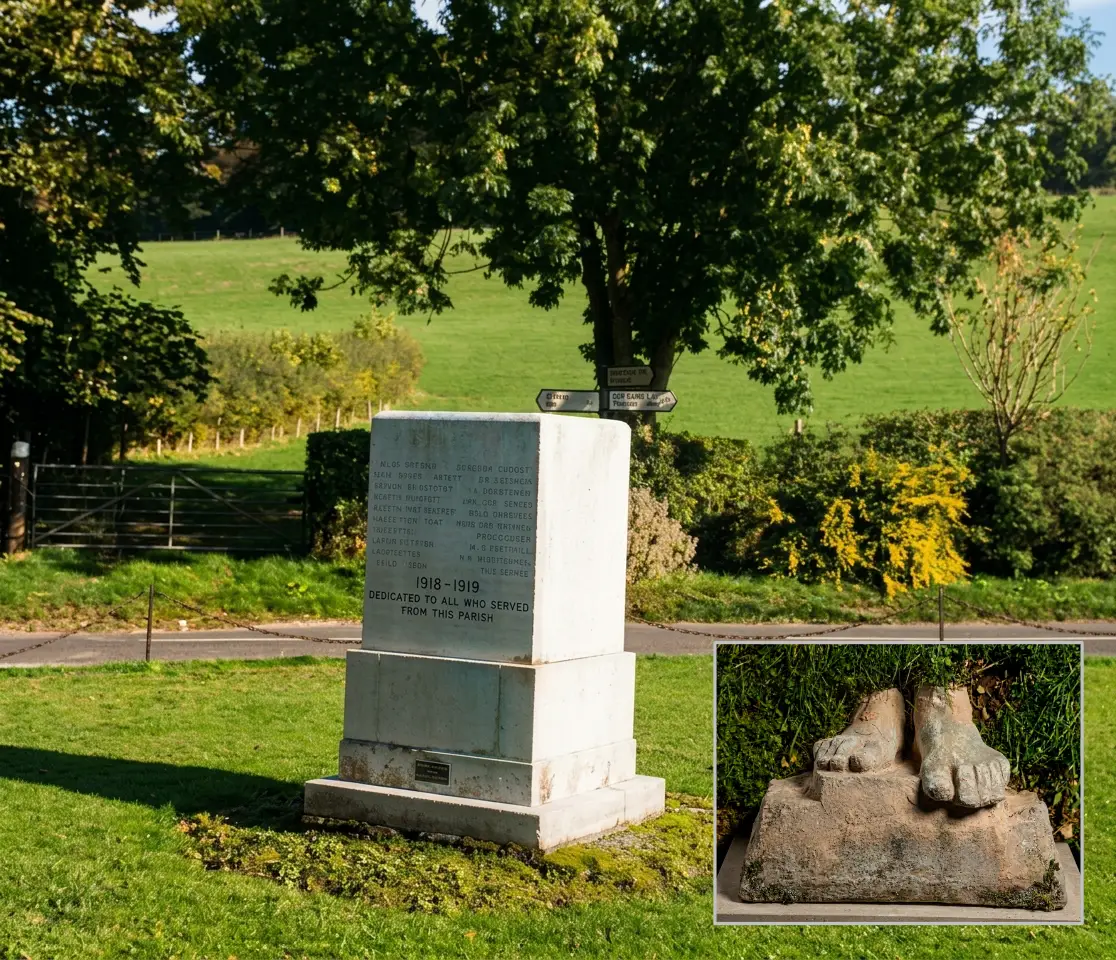
Unfortunately, thieves stole the War Memorial Statue for a second time on the night of 6 October, 1995. Once again, thieves used ropes and a lorry to haul the bronze figure from its plinth and drag it unceremoniously along Malthouse Road. This time, the statue was never recovered. The composite photo highlights the remaining plinth, and the inset photo shows the statue’s feet still attached to the top plinth but broken from the main statue. The thieves presumably discarded these nearby in their haste to leave the scene. Note: The image has been digitally enhanced for publication clarity; the Society’s digital archive holds the original photographs.
The Police were not able to trace the perpetrators, and the Parish Council made valiant efforts to track down any remaining relevant original material in Strobl’s Budapest studio. Frustrated by these attempts, the Council searched for a sculptor who could create a new Palm Bearer statue for the memorial. The foresight of an earlier Council Chairman, Ernest Unwin, fortunately ensured adequate insurance cover for this eventuality.
After widespread consultation, the Parish Council agreed to obtain a replacement statue in the original’s style. After receiving several quotations and consulting various reputable sculptors, the Parish Council awarded the commission to Faith Winter FRBS.
Faith Winter (née Ashe; 1927–2017) was a British sculptor, best known for statues and memorials to military and historical figures she created for British towns and cities. Winter was born in Richmond and studied at the Guildford School of Art and the Chelsea School of Art. While a student, she won the Feodora Gleichen prize of the Royal Society of Sculptors and had four pieces accepted for exhibition by the Royal Academy in London. Winter held solo exhibitions at the Guildford House Gallery, Guildford, in 2002 and at Gallery 27 in 2005. She was a member of the Society of Portrait Sculptors and was made a Fellow of the Royal Society of Sculptors in 1983.
The Burleighfield Arts Foundry (also known as Burleighfield Arts Limited or Burleighfield Foundry) was a prominent British bronze sculpture foundry established in April 1977 in Loudwater, High Wycombe, Buckinghamshire. This foundry was chosen to cast the replacement statue at a cost of £14,900 (ex. VAT). The total cost of replacing and re-erecting the statue was £17,557.79 (ex. VAT), of which £15,350 was recovered from the insurance and £1,000 from Tonbridge and Malling BC. Stansted Parish Council made up the difference from its reserves.
The replacement statue was delivered and installed on 5 November 1996, using a large crane to place the new statue on the original plinth. In addition to various local residents, the Stansted schoolchildren also visited the site to view the proceedings.
On Sunday 10 November 1996, the Rt Rev. Brian A Smith, Bishop of Tonbridge, together with the Stansted Rector, Chris Noble, led a formal dedication service. The ceremony was followed by lunch in the barn at Court Lodge, Stansted.
A photo gallery relating to the casting of the replacement statue and its installation is available by selecting the following link:
The following video was filmed by Alan Parker in 1965 and shows the arrival of the crane and the installation of the replacement statue. Along with St Mary’s Church, the War Memorial continues to serve as a focal point for the Parish of Stansted and remains the centrepiece for Remembrance Day celebrations to this day.