
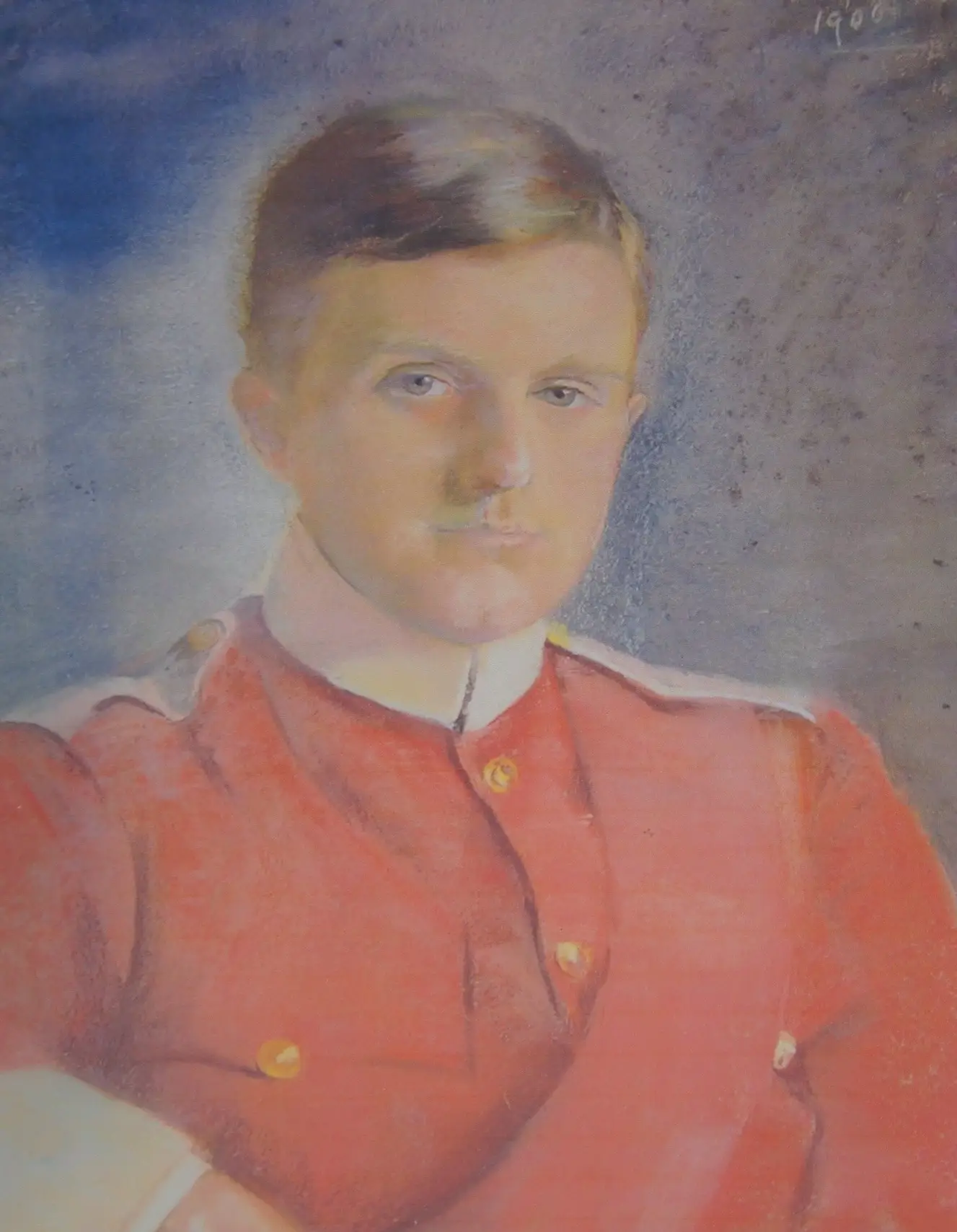
William Pitt was born in 1880 in Bombay, India and, as a Major in the Somerset Light Infantry, was killed in action on 20th August 1916 in Northern France, aged 35. He left a wife and two young children. His brother James had also been killed in WW1 two years earlier.
William was the oldest of two sons of Colonel William Pitt, C.M.G. and Mary Pitt (née Brindley) and was born on 12 September 1880 in the Kirkee military cantonment at Poona, Bombay (now Mumbai). His father became a Colonel in the Royal Engineers. His sister, Mary Winifred ‘May’, was born in England in 1882, and his brother, James Maxwell, was born in 1888, also in England.
William Pitt attended Haileybury School in Hertfordshire from 1894 to 1896. Like his father, he pursued a military career and received officer training at Sandhurst, passing out in the Senior Division in June 1900.
He quickly went on active service and was part of the Lincolnshire Regiment in the Second Boer War and received the Queen’s South Africa Medal with 5 clasps. He was commissioned as a second lieutenant on 11 August 1900, and lieutenant on 14 June 1902. Ill-health forced him temporarily onto half-pay in August 1905, but he quickly recovered. He then retired in 1910 as a Captain on half-pay in the Special Reserve, in order to follow a career in the Church.
In December 1911 he passed the non-graduates Central Entrance Examination for the Theology College, Salisbury, and he matriculated at Durham in 1913 as an unattached student. He completed the first part of his Theology studies successfully, but did not complete his studies and so never gained his Licentiate – the war presumably intervening.
The census of 1911 shows William living with his parents at Enham House, Knights Enham, near Andover, Hampshire. At that time William’s occupation was listed as a Captain in the Special Reserve, Theological Student, Salisbury. In 1916, his parents bought Fairseat House from the Kemballs and came to live in Fairseat, where they remained until their deaths in 1933 and 1949.
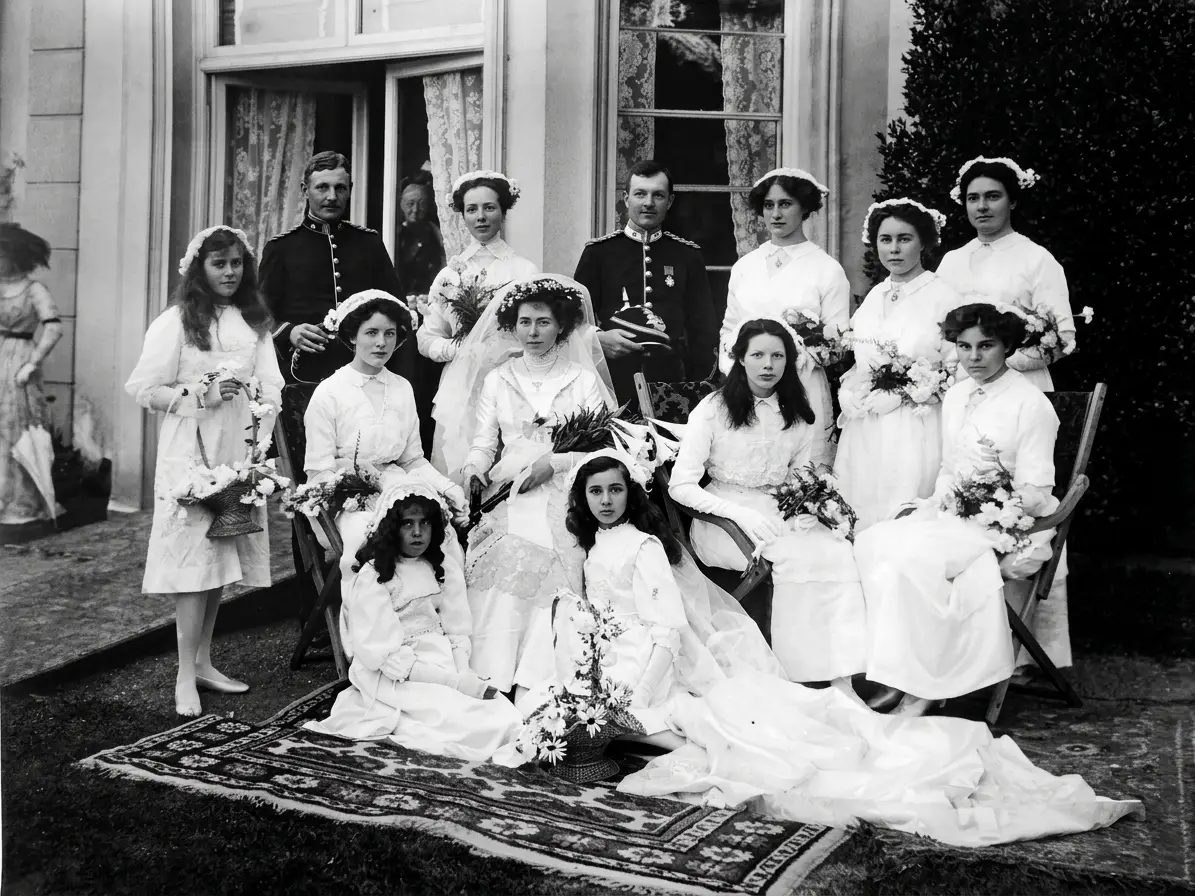
In July 1911, William married Lucy Graham Walker, and they lived at Holmeside, Elm Grove, Salisbury, where their first son (William ‘John’ Pitt) was born.
After the outbreak of war, William’s brother James was sent to France first, and only a few months later, on 13th October 1914, he was killed in action at Pont Fixe, south-west of Lille in northern France. He was 26 years old and was a Lieutenant and Adjutant in the 1st Battalion, Dorset Regiment. He was unmarried and is buried at Brown’s Road Cemetery, Festubert. He died just ten days after his nephew was born.
This must have tested William’s faith, but he returned to active service in 1915 and on 11 March 1916 was gazetted as Temporary Major and was second in command of the 2nd Battalion, 3rd Lincolnshire Regiment. The young couple’s second son (Neville M F P ‘Peter’ Pitt) was born on 5th July 1916.
William’s unit was at the time occupying the Quarries Sector near Loos, and the battalion’s war diary notes a lot of incoming and outgoing artillery and trench mortar fire over 16-19 August. During this period, Major Pitt was hit, and he succumbed to his wounds on 20 August 1916, just six weeks after the birth of his second son.
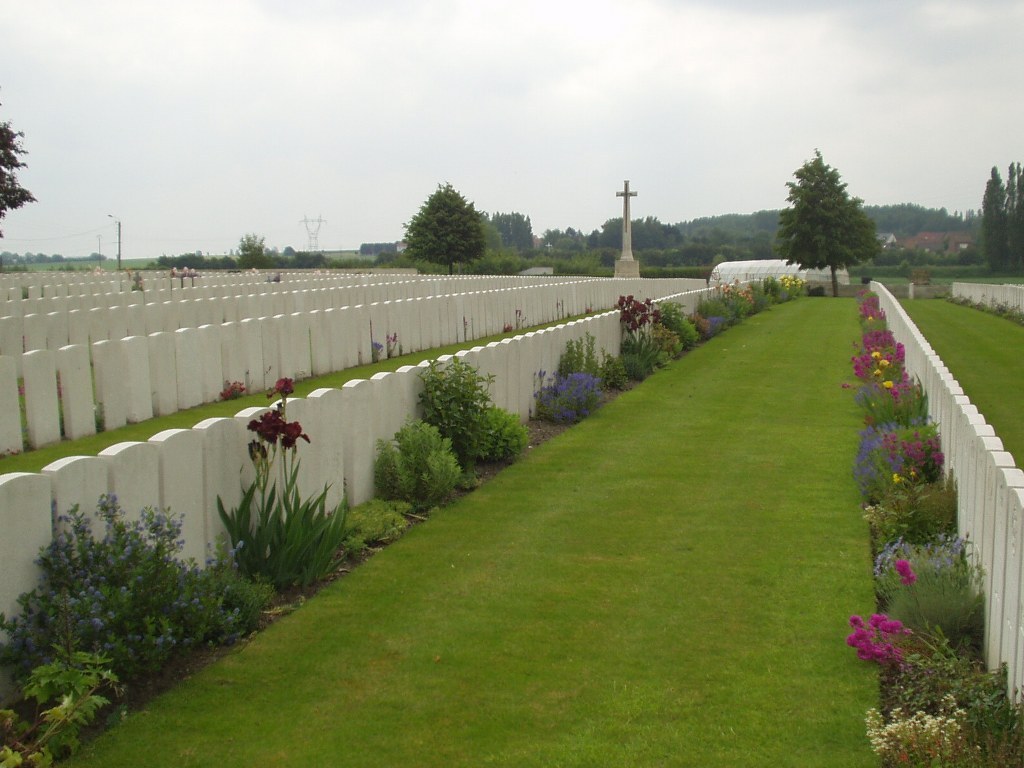
William’s grave marker has the following inscription: His brave life for his country. His Steadfast soul to God. This is the identical inscription as appears on his brother William’s grave, who had died two years before.
After the loss of both of their sons, Colonel and Mrs Pitt moved from Enham House, Hampshire and bought Fairseat House from the Kemballs later in 1916.
William and his brother are commemorated on the Stansted War Memorial and in a stained glass window above a marble plaque in St Mary’s Church, Stansted, which was unveiled by their father on the 10th March 1920.
The marble plaque under the stained glass window reads as follows:
This window is erected to the glory of God and to the most dear and brave memory of William Neville Pitt, Major and second in command, 2nd Lincoln Regiment, who died of wounds in France 20 August 1916, and of James Maxwell Pitt, Lieutenant and adjutant, 1st Dorset Regiment, who was killed in action in France 13 October 1914. The only surviving sons of Colonel William Pitt, R.E. and Mary James, his wife, of Fairseat House.
In 1921 William received the British Victory and Star Medals posthumously. His father applied for them whilst living at Fairseat House, and they were sent to Williams’ widow, Lucy, in Torquay. Lucy continued to live in the West Country until her death in 1959.
Colonel Pitt died in 1933 and his wife in 1949. Mrs Pitt sold Fairseat House in 1935 to Hugh and Grisell Pasteur and continued to live in Fairseat Lodge until her death. Colonel Pitt and Mary are both buried in St Mary’s churchyard.
Note: A biography of Major William Pitt’s father, Colonel William Pitt, is available in the ‘Luminaries’ section, accessible via the ‘People’ option in the main website menu. A biography of Major William Pitt’s brother, James Pitt, is available in the ‘WW1 Participants’ section, accessible via the ‘People’ option in the main website menu.