
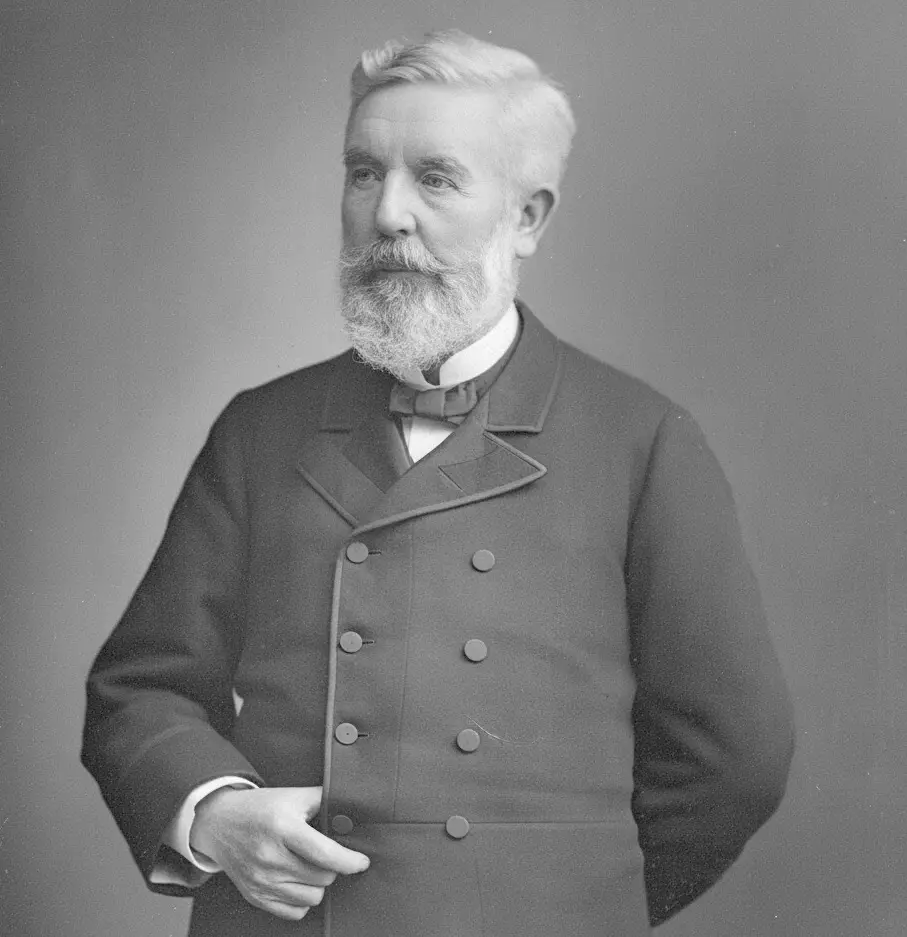
Sir Sydney Hedley Waterlow, 1st Baronet, KCVO (1822–1906) was a British philanthropist and Liberal Party politician, best known for donating Waterlow Park in Highgate, North London, to the public as “a garden for the gardenless” and for building Trosley Towers in Fairseat, Kent.
The Waterlow family were among the wealthiest and most influential in the City of London during the Victorian and Edwardian eras. The earliest Waterlows found in England were refugees from the persecution of Protestants in northern France in 1628, and are mentioned in the marriage registers of a Protestant refugee society in Canterbury in 1633.
Early Days
Sydney Waterlow was born on 1 November 1822 at Crown Street, Finsbury, and his father, James Waterlow, was a Councillor for the Cornhill ward. Sydney’s first school was a dame’s establishment at Worship Street, Finsbury, from around 1827 to 1829, but he was sent to Brighton as a boarder aged 7-9 (1829-31) and attended St. Saviour’s Grammar School, Southwark, from 9 to 14 years old (1831-36). During this latter period, he lived at his father’s house in Gloucester Terrace, Hoxton, and walked the 3 miles to Southwark and back again every day. Like his father, James, he was a member of the Unitarian congregation at South Place chapel, Finsbury, under the ministry of William Johnson Fox, whose teachings greatly influenced the young Waterlow.
Note: A dame school was a small, informal private school, common in England and its colonies from the 17th to 19th centuries, run by a local woman (the “dame”) in her own home, teaching young children basic reading, writing, and sometimes sewing or chores for a small fee, acting as a precursor to modern nursery/infant schools but with wildly varying quality. They provided basic education, often for working-class children, before formal, state-funded schooling became widespread.
Sydney’s father, James Waterlow, established a stationery business at Birchin Lane, City of London, in 1811, a small shop selling copies of legal documents produced by lithography. The business prospered and, by 1820, had opened a second office on Poland Street, off Oxford Street, thus establishing a ‘West End’ presence. The business was the origin of ‘Waterlow & Sons’, which was to become the printing and stationery empire. James died in 1876 at the age of 86 and is buried at Forest Hill Cemetery.
In November 1836, aged 14, Sydney became a bound apprentice through the offices of the Stationer’s Company to his uncle Thomas Harrison, the government printer, for a seven-year term during which he lived with his uncle, firstly at Coleshill Street, Pimlico and later at Westbourne Terrace, Sloane Square. The 1841 census records Sydney at home with his parents and family at 5 Gloucester Terrace.
As a result of his diligence, Sydney was placed in sole charge of the Foreign Office printing contract at Harrison’s, with full responsibility from the age of only 18 and well before completion of his indentures. On the expiration of his indentures in November 1843, Sydney went to Paris and was employed by the publisher Galignani. He returned to London at Easter 1844 and joined the family firm in partnership with his father James and brothers Alfred, Walter and Albert to add a printing branch to the stationery business in Birchin Lane.
Marriage
Sydney married Anna Maria Hickson on 7th May 1845, aged 22, at the Unitarian South Place Chapel, Finsbury. Anna was the younger sister of William Hickson of Fairseat, in Kent, but was born in the City of London on 19th November 1824. The Hickson family lived at Fairseat Manor, and close ties between the two families subsequently developed.
Sydney and Anna had a total of 12 children, born between 1846 and 1865: Frank William – born 6 July 1846, Philip Hickson – born 30 October 1847, Walter – born 21 March 1849, Ruth – born 8 August 1850, George Sydney – born 12 April 1852, Charles Hickson – born 9 August 1854, Sydney Albert – born 10 January 1856, David Sydney – born 18 December 1857, Albert Hedley – born 21 April 1859, Hilda Maria – born 10 April 1861, Paul Langbourne – born 22 February 1863, Celia Agnes – born 24 January 1865.
Time at Highgate
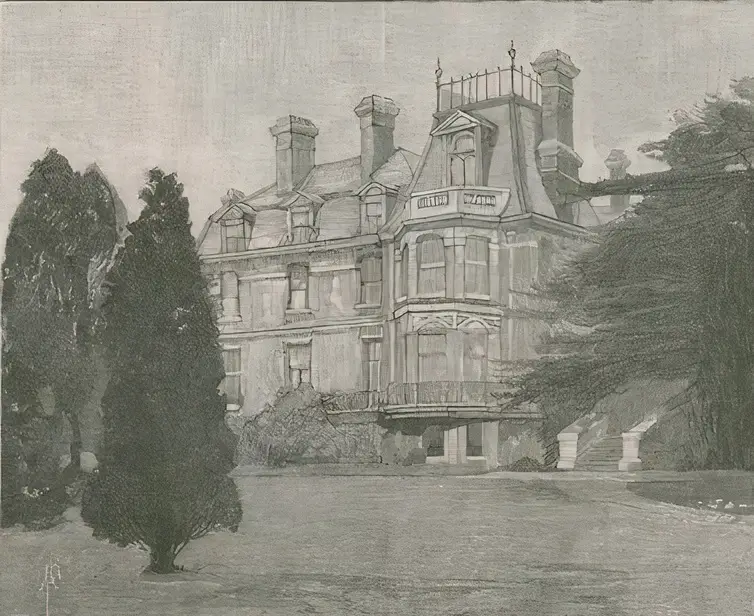
In 1856, Sydney leased a substantial property in Highgate, North London, which was to become his main family home. He named the property ‘Fairseat’, after his wife’s family home in Fairseat in the parish of Stansted, Kent. An adjacent property on Highgate Hill, Hertford House, was occupied by William Hickson’s family from 1850, thereby cementing ties between the Waterlow and Hickson families in both Highgate and Fairseat, Kent.
Sydney joined the City of London Corporation when he was elected a common councilman for the ward of Broad Street. On 3rd April 1862, it is recorded in the minutes of the Common Council that he received a special vote of thanks from the corporation for ‘devising and establishing a system of over-house telegraphs for the City police stations’. Until 1857, telegraph cables could only be buried underground in big cities, and this being prohibitively expensive, stifled the development of a widespread commercial communication system. The first Waterlow achievement was to negotiate a system of wayleaves whereby the wires could be strung between private buildings at eaves level, on payment of a small annual fee to the owners for the privilege. Another innovation, attributed to Sydney, was the use of multi-core cables rather than single wires, thereby paving the way for general commercial use and the rapid expansion of the system in London by the United Telegraph Company and others from 1860.
The 1861 census records Sydney, Anna, and their then six children living at Fairseat House in Highgate, North London. At this time, the property is in its original condition, prior to the extensive building work undertaken in 1866/67. There are seven servants in residence, a nurse and six general domestic staff. Sydney is described as a “Stationer and Printer”.
Sydney was to become famous in the metropolis for his practical philanthropy. In 1862, he had built at his own expense, Langbourne Buildings in Mark Street, Finsbury, a prototype standard design block of dwellings with accommodation for eighty families; these tenements, though let at moderate rents, produced a good return for the outlay. In 1863, he founded the Improved Industrial Dwellings Company Limited (IIDC) to build housing for workers and the poor displaced from slums by railway construction.
No architect was employed; the designs were Waterlow’s own. The construction was novel, using concrete floors and roofs, which were virtually fireproof and well ventilated for health reasons; there were self-contained toilets and washing facilities, open balconies, and exterior staircases. Pompous architects criticised him on the relatively trivial grounds that “coffins could not easily be got down the staircases”. Sydney was to become the “guiding genius” of the IIDC, which went on to build, for example, the Cobden Buildings in Kings Cross and the Stanley Buildings in Pancras Road. Sydney served as chairman of the company until his death in 1906, at which time it owned a total of 6,000 tenements housing 30,000 persons across more than 40 locations. By 1909, the company had amassed a capital value of £1,000,000.
Sydney Waterlow was elected Alderman of Langbourn ward, City of London, on 29th January 1863; at his inauguration, he was described as an “honourable and amiable character”, and as Alderman, he presided over numerous criminal trials in the City over the next few years.
Fairseat Estate, Highgate (Waterlow Park)
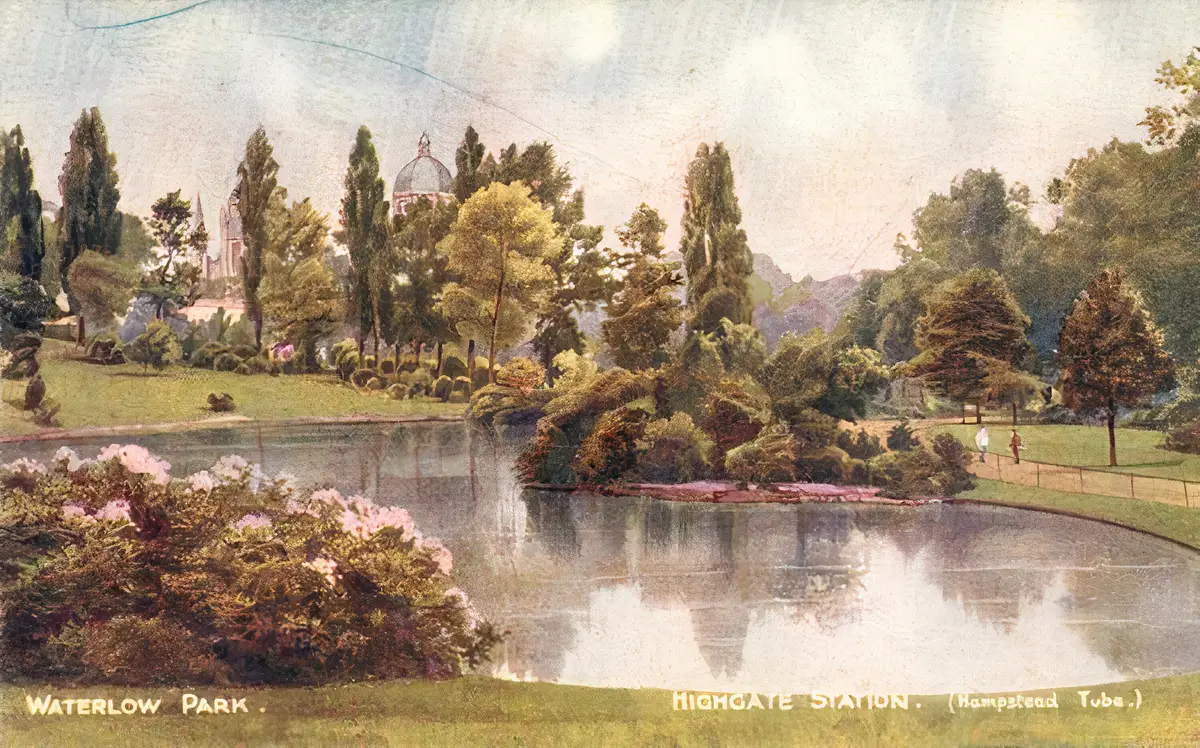
In 1865, Sydney Waterlow began developing his Fairseat estate in Highgate, which later became Waterlow Park. In June that year, he acquired Lauderdale House and grounds, Elm Court, and the Andrew Marvell estate. He secured a long lease on his Fairseat home in Highgate, having been unsuccessful in obtaining the freehold. Hertford House was added to the estate in 1869. All of the properties and grounds formed an estate of 29 acres.
In 1866, Sydney embarked on a large programme of work on the new estate. He had his house, ‘Fairseat’, totally rebuilt and greatly enlarged, and laid out its extensive landscaped park with stunning views across and down to the city about 4 miles to the south-east. The new mansion was “of three storeys, in the French Renaissance style, one wing having a fine bay window of two stages and a bold mansard roof, the top of which is surrounded with an ornamental railing”.
Lauderdale House was one of the finest country houses in Highgate and was originally built for Richard Martin (Lord Mayor of London) in 1582 with a timber frame. In the early 17th Century, it was occupied by Sir Henry Hobart, who in 1616 built Blickling Hall in Norfolk, now a National Trust property. The house was purchased by Henrietta Maria’s silk merchant, William Geere, who sold it to Mary, Countess of Home, who extended the house. In 1645, it came to the Earl of Lauderdale (hence its name) as his wife Anne Home’s inheritance. In 1666, it was visited by Charles II and Samuel Pepys, while Nell Gwyn is said to have lived there briefly in 1670. It was later the home of the Lord Mayor of London, Sir William Pritchard.
It was converted to a neoclassical style in 1760, and John Wesley preached here in 1782. For some time, it was the home of James Yates, antiquary and Unitarian, who retired there to spend years of “learned leisure” amidst “a noble library and a fine collection of works of art”. He died there in 1871.
In 1872, Sir Sydney granted Lauderdale House rent-free to St Bartholomew’s Hospital as a convalescent home. It now operates primarily as an arts and education centre, welcoming more than 65,000 visitors annually. In 1889, Waterlow presented the estate and its grounds to the London County Council, as “a garden for the gardenless”. After Waterlow’s time, Fairseat House was acquired by Channing House (now Channing School) in 1926, initially for use as a boarding house, and later became its dedicated Junior School. Today, Fairseat House is integral to Channing School, with buildings on the campus housing various departments, and the historic significance of the adjacent Waterlow Park remains.
The estate consisted of 26 acres of beautifully undulating grounds, well timbered with oaks, old cedars of Lebanon, and many other well-grown trees and shrubs, with 11/2 acres of ornamental water supplied from natural springs. By 1889, the planting, paths, and upper ponds were in a layout similar to the present one. Still, additional work was needed to convert it into a public park, including the construction of the southern lake, tennis courts, new entrances and paths, a rustic bandstand (demolished in the late twentieth century), an octagonal aviary, and some further planting.
Appointments, M.P. and Knighthood
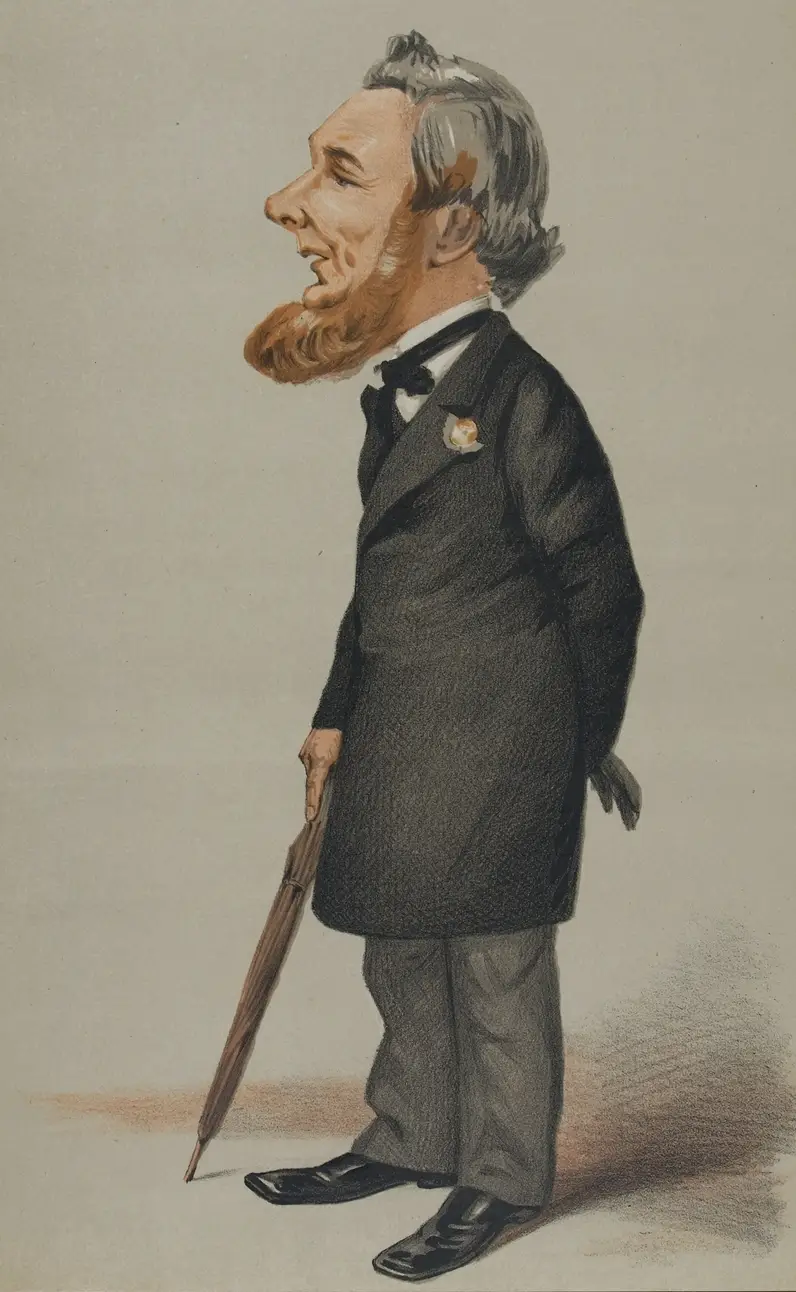
Alderman Sydney Waterlow was appointed to the office of Sheriff of London in 1866 and, in that post, served as a juror for Great Britain at the International Exhibition of Paris the following year, visiting with an official party. His term was also notable for a banquet hosted for the Viceroy of Egypt at the Mansion House and the reception for Sultan Abdulaziz by the City of London Corporation at Guildhall. Sydney was subsequently knighted on the 3rd August 1867.
Sir Sydney was returned as the Liberal Member of Parliament for Dumfriesshire, Scotland, in 1868, but was unseated a few months later on technical grounds, his printing firm having taken a Government contract of which he claimed to have no personal knowledge. This is despite his having formally left the family business partnership in November 1868 in anticipation of just such a problem.
After unsuccessful contests for the same seat in 1869 and for Southwark in 1870, he was eventually returned for Maidstone, Kent, in 1874 and sat for that borough until 1880. He was elected to the Gravesend seat shortly thereafter and retained it until 1885.
Sir Sydney was elected as Lord Mayor of London on 28 September 1872. Investiture of his year in office was on the 8th November at Westminster Hall, followed by the customary public parade and later a banquet at the Guildhall on the 9th. Samuel Clemens, the popular American author ‘Mark Twain’, was one of the guests on his first visit to England gathering material for a book, and wrote to his wife back home the following day: “Livy darling, it was flattering, at the Lord Mayor’s dinner tonight, to have the nation’s honoured favourite, the Lord High Chancellor of England, in his vast wig & gown, with a splendid, sword-bearing lackey following him and holding up his train, walk me arm-in-arm through the brilliant assemblage, and welcome me with the enthusiasm of a girl, & tell me that when affairs of state oppress him & he can’t sleep, he always has my books at hand & forgets his perplexities in reading them”
In addition to his many other commitments, he served as Master of the Stationers’ Company between 1872 and 1872. Decorations received in this prestigious period of his life included the Grand Cross of the Crown of Italy and the Legion of Honour of France, also the Orders of the Medjidh of Turkey and ‘The Lion and the Sun’ medal of Persia.
Lord Mayor Waterlow hosted the first ever gathering of all the provincial mayors of England at the Mansion House in late 1872, in the company of Mr William Gladstone and others. This event was said to “mark the start of the golden years of Victorian municipal enterprise”. Another similar banquet was held in York some months later.
On Christmas Day 1872, Sir Sydney hosted a family banquet at the Guildhall, with over 180 members present, including his father, James, aged 82. In 1873, a similar function was held in the Egyptian Room at the Mansion House, this time entertaining more than 100 members of the printing firm of Waterlow & Sons, including many who had served the company for more than 30 years.
In 1872, Sir Sydney also secured an Act through Parliament requiring railway companies and similar bodies to set aside land for the rehousing of displaced inhabitants, a provision that undoubtedly reflected his interests, no doubt from his IIDC activities. In business, he became known as “Mr Five Per cent” – his
‘rule’ in all his dealings! About the same time, he formed a committee in the City of London to start up Technical Schools; this led to the formation of the City & Guilds Institute.
Sydney Waterlow apparently had an early wish, not fulfilled, to become a Doctor, hence his later involvement with St Bartholomew’s Hospital and similar institutions; he became a personal friend of the nurse Florence Nightingale. He purchased the freehold of Lauderdale House on his Highgate estate and presented it, with its grounds, to Bart’s for use as a convalescent home.
The building was adapted and furnished at his expense and was opened on 8th July 1872 by the future King Edward VII and Queen Alexandra, then Prince and Princess of Wales.
On 10 March 1873, he presided at the opening to the public of the newly built Guildhall Library and hosted a dinner in honour of the University Boat Race crews. From April to June 1873, he hosted the Shah of Persia’s first visit to London, culminating in a grand dinner at the Guildhall on 20 June.
In recognition of his dedicated public service and philanthropy, Sir Sydney was created a Baronet on 29 July 1873 by grant of William Gladstone and conferred by Queen Victoria on 4th August.
Sir Sydney became treasurer of St. Bartholomew’s Hospital in 1874, serving in this capacity until June 1892. He proposed isolating contagious cases and implementing other reforms, such as employing trained nurses under a matron as superintendent. Sir Sydney worked with Miss Nightingale and Mrs Gladstone on these schemes.
At home in Highgate, Charles Thomas Hammond joined Sir Sydney’s employment at Fairseat House during 1874 as his first and only butler, staying for over 30 years. He was 22 years old when he arrived in London with his stepbrothers in 1868. Charles married Emily Williams early in 1874, and they moved into rooms above the Coach House at Fairseat, in Highgate.
Sir Sydney made his first visit to the United States in 1876 with his son Philip, as a commissioner and juror for Great Britain at the World’s Exhibition in Philadelphia. Charles Hammond accompanied them there, undoubtedly a significant adventure for him. Sydney’s father, James Waterlow, died while he was away, at the age of 86.
Sir Sydney’s wife, Lady Anna Marie, died on 21 January 1880 in Nice on the French Riviera, at the age of 55. She had gone there some weeks previously, trying to escape the detrimental effects of the English winter. In the April 1881 census, Sir Sydney is recorded as staying at his late wife’s family home in Fairseat, Kent.
Waterlow Park
In 1889, Sir Sydney made the generous and public-spirited decision to present the whole of his Highgate estate to the London County Council with the intention of it becoming a public park, or as he described it, “Gardens for the Gardenless”. The bequest caused great excitement and interest and was widely reported in the newspapers.
The following is an extract of his official letter of bequest to the London County Council:
On the southern slope of Highgate Hill, in the parish of St. Pancras, I own an estate of nearly 29 acres in extent, which was for many years my own home. This property, if judiciously laid out, would, I think, make an excellent public park for the North of London. The grounds are undulating, well timbered with oaks, old cedars of Lebanon, and many other well-grown trees and shrubs. There is also 1.5 acres of ornamental water, supplied from natural springs. The land is freehold, except for 2.75 acres, held on a long lease of which 35.5 years remain unexpired. It is bounded almost entirely by public roads and a public footpath.
Therefore, to assist in providing large gardens for the gardenless and as an expression of attachment to the great city in which I have worked for fifty-three years, I desire to present to the Council, as a free gift, my entire interest in the estate at Highgate above referred to.
On 12 November 1889, a packed assembly of the London County Council formally accepted Sir Sydney Waterlow’s gift and asked that “the thanks of the Council be communicated to him for his munificent gift to the inhabitants of the Metropolis”.
The Council undertook various changes to the estate in the following two years to make it suitable for public use. The conversion from a private estate to a public park was managed by the LCC architect Mr Blashill, whose brief included: ‘… to preserve as much as possible of the present features of the properties, and particularly all points of historical interest, of which there are many in connection with the Lauderdale House section’.
The park was named ‘Waterlow Park’ and was officially opened on 17 October 1891, with the bands of the Grenadier Guards and the London Rifle Brigade in attendance. Further improvement works took place over the following years.
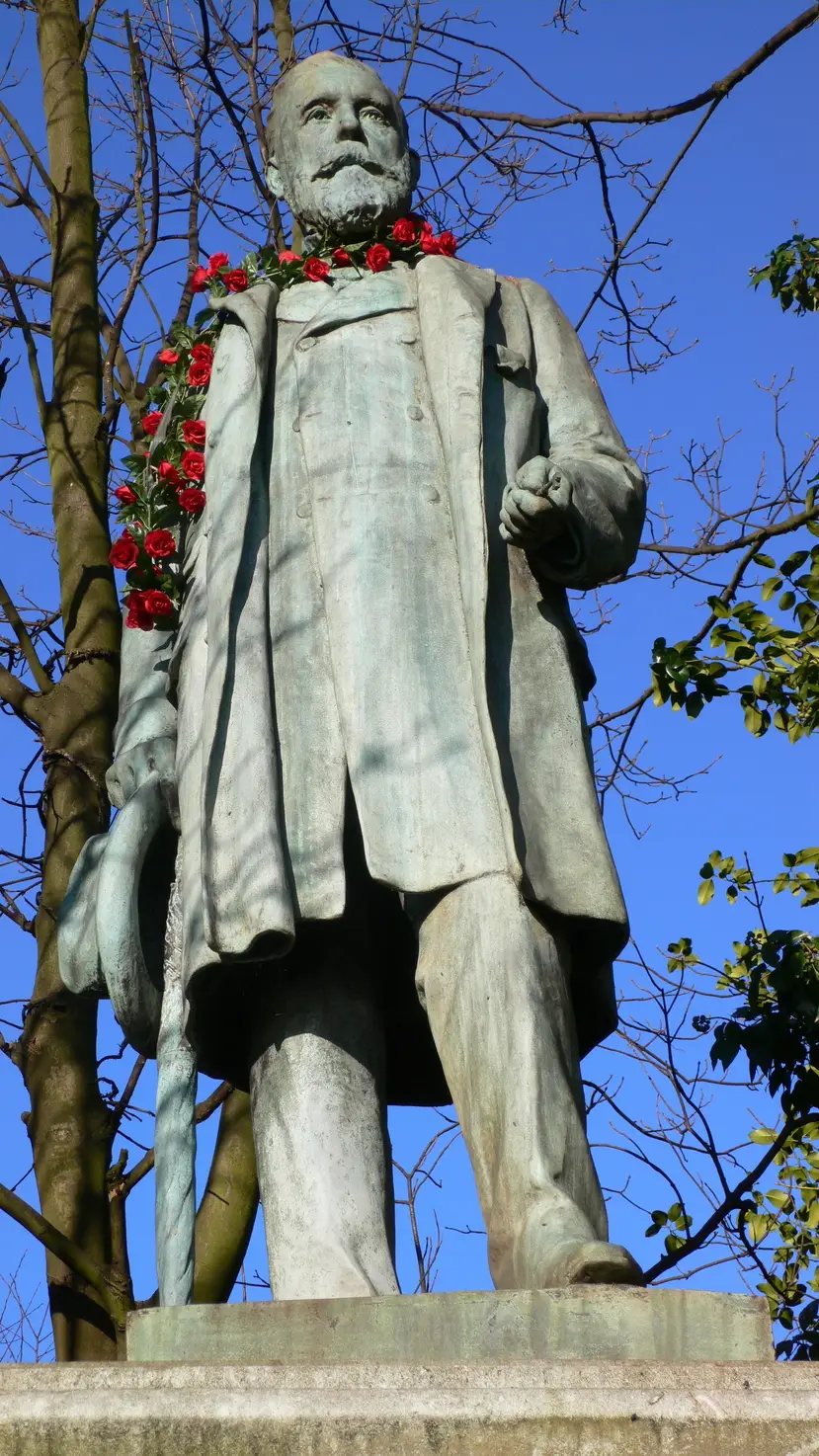
A bronze statue of Sir Sidney Waterlow by Frank Taubmann was erected in the park in 1900. The sculpture depicts Sir Sydney holding a hat and an umbrella, with a key symbolising his donation of the land to the public.
Unfortunately, the park suffered years of neglect and vandalism in the 20th century, but was restored with a grant from the Heritage Lottery Fund in 2001. It reopened in 2005 and is now managed by the London Borough of Camden.
Note: Ian Hunter of Mott the Hoople referenced the park in the song “Waterlow” from the band’s 1971 album ‘Wildlife’. This is thought to be a reference to Island’s recording studio, which was situated in the area. A recording is available at the end of this article.
Second Marriage
In August 1881, Sir Sydney embarked on a grand tour of Canada and the USA, where he met his future second wife, Margaret Hamilton, for the first time during a brief visit to San Francisco, when they were both guests of railroad tycoon Charles Crocker. Margaret was the daughter of a wealthy American banker. She and Sir Sydney were married at the British Embassy, Paris, on the 28th of March 1882.
In 1886, Agnes, the mother of Sir Sydney’s second wife, died while she was living in Fairseat and was buried in St. Mary’s churchyard, Stansted, Kent. Her headstone includes the words “Wife of the late William Hamilton, of San Francisco, California”. She had an extraordinary ‘rags to riches’ tale, starting life in humble surroundings in Scotland in 1821, moving to the American Midwest where times were hard, benefitting from the California gold rush of 1849, then high society in San Francisco and ending as the mother-in-law of one of the richest men in England.
Trosley Towers
Sir Sydney had substantial landholdings in Kent, including the village of Fairseat and a considerable portion of Stansted. In the early 1880’s he purchased 376 acres of prime Kentish downland very close to his first wife’s family property, ‘Fairseat House’.
The new estate was to the south of Fairseat and north of the village of Trottiscliffe and extended in an easterly direction towards Meopham, and towards Wrotham in the west. Parts of the southern boundary followed the Pilgrims’ Way, the historical route taken by pilgrims from Winchester to the shrine of Thomas Becket at Canterbury. Locally, the route runs through Otford, Kemsing and Wrotham, north of Trottiscliffe, towards Cuxton, where it crosses the River Medway.
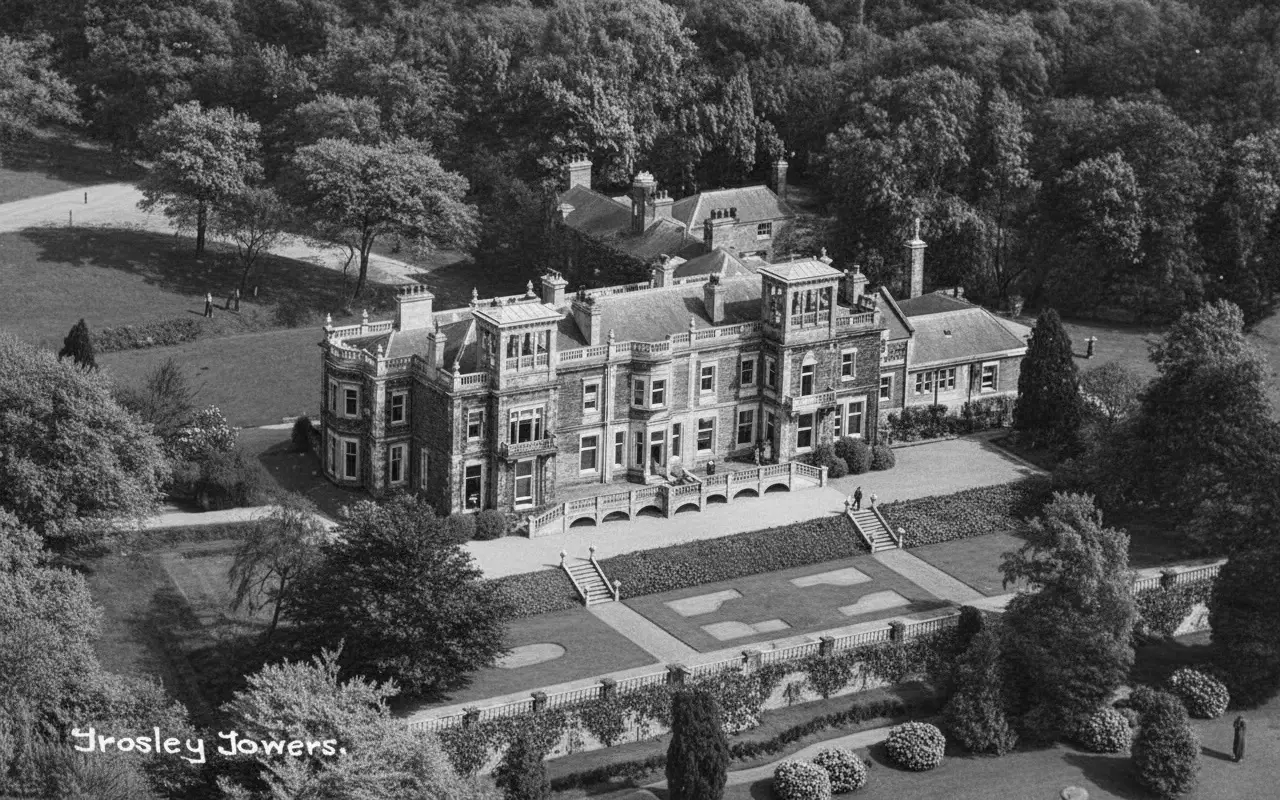
The area was referred to as ‘Trosley Estate’, named after the neighbouring village of Trottiscliffe, which is locally pronounced as ‘Trosley’. The estate is approximately 700 feet above sea level and offers spectacular views over the villages of Trotticliffe and Wrotham, extending to the South Downs. It was on the Westerley portion of the estate where Sir Sydney was to build his extensive country mansion, ‘Trosley Towers’.
In 1887, Sir Sydney finished the building of Trosley Towers on the crest of the escarpment on the North Downs, to the east of Trottiscliffe Road, which is now named Vigo Hill. Two drives approached the property, which included landscaped gardens to the south and was surrounded by wooded grounds. One of the access carriageways to the east of Trosley Towers crosses Trottiscliffe Hill via a bridge that still exists today and bears the Waterlow crest.
Sir Sydney died whilst at Trosley Towers in 1906, and the mansion, together with the surrounding estate, passed to his eldest remaining son, Philip Waterlow. Following Sir Philip’s death in 1931, the estate was offered for sale at auction in 1932 and subsequently sold privately in 1935.
During World War 2, the estate was occupied by the Army and used as an Officer Cadet training facility. The area of the original estate, to the east of Trosley Hill, was later to become ‘Trosley Country Park’, managed by Kent County Council, and a further section to the north east was sold to Croudace Ltd., who developed some 800 homes to become the self-contained community of Vigo Village.
Note: Further information on Trosley Towers is available under ‘Landmarks’, within the ‘Places’ section.
In Memoriam
Sir Sydney ceased his remaining public service appointments in 1893 due to continuing ill health, having also suffered a serious stroke. His son, Philip Hickson, continued to run Waterlow & Sons, having already served as chairman for several years.
Around this time, Sir Sydney and Lady Waterlow purchased Villa Aberlour, Chemin de Beau, in Cannes on the French Riviera, to serve as a winter residence in his later years. They renamed the villa “Monterey” to commemorate the place in California where they first met, and stayed there from October through to April or May most years for health reasons, returning to Trosley Towers for the summer months.
Sir Sydney died after a brief illness at his country residence, Trosley Towers, on 3 August 1906, and is buried at St Mary’s Church, Stansted, Kent. His Baronetcy passed to his son, Philip Hickson.
The following newspaper announcement was published in the Daily Telegraph on 8 August 1906:
“Very simply, the funeral of the late Sir Waterlow took place in Stansted Churchyard, near Trosley Towers, the service being conducted by Canon Fleming, of St. Michael’s, Chester-square, and the Rev. A. R. Cronk, of Stansted. Among the mourners were Lady Waterlow, Mr Philip H. Waterlow, eldest son, who now succeeds to the baronetcy; Mrs Homan and Miss Waterlow (daughters), Mrs George Waterlow, Mr and Mrs Charles Waterlow. Mr and Mrs David Waterlow, Mr and Mrs Paul Waterlow, and other relatives; Mr J. Bass, Sir Owen Roberts, Sir James Whitehead, Sir Edmund Hay Currie, and others. The coffin was conveyed to the churchyard on an agricultural wagon, covered with flowers and evergreens.
A memorial service for the late Sir Sydney H. Waterlow was held, simultaneously with the funeral, at the church of St. Bartholomew the Less, within the gates of St. Bartholomew’s Hospital, conducted by the Rev. Richard Adams (Assistant Hospitaller), in the absence of the vicar through indisposition. The only hymn sung was “O, Let Him Whose Sorrow”, and the Dead March from “Saul” was played at the conclusion. Among those present were numerous representatives of the surgical and nursing staffs, Mrs Edgar Waterlow, Sir Edward Ward, Mr F W Goodman, Major H Vane Stowe (secretary of the Master Printers’ Association), Captain W V Stewart, Mrs Horrocks, Mr W M Trollope, Mr G. Charlton, Mr T D Syers, Mr D’Arcy Power (acting secretary of the Medical Council of St. Bartholomew’s Hospital), and others. It may be stated that since the inception of the Metropolitan Hospital Sunday Fund, during the late Sir Sydney H Waterlow’s mayoralty of the City of London, the total collections (including congregational amounts, legacies, and special donations) have exceeded £1,444,000.”
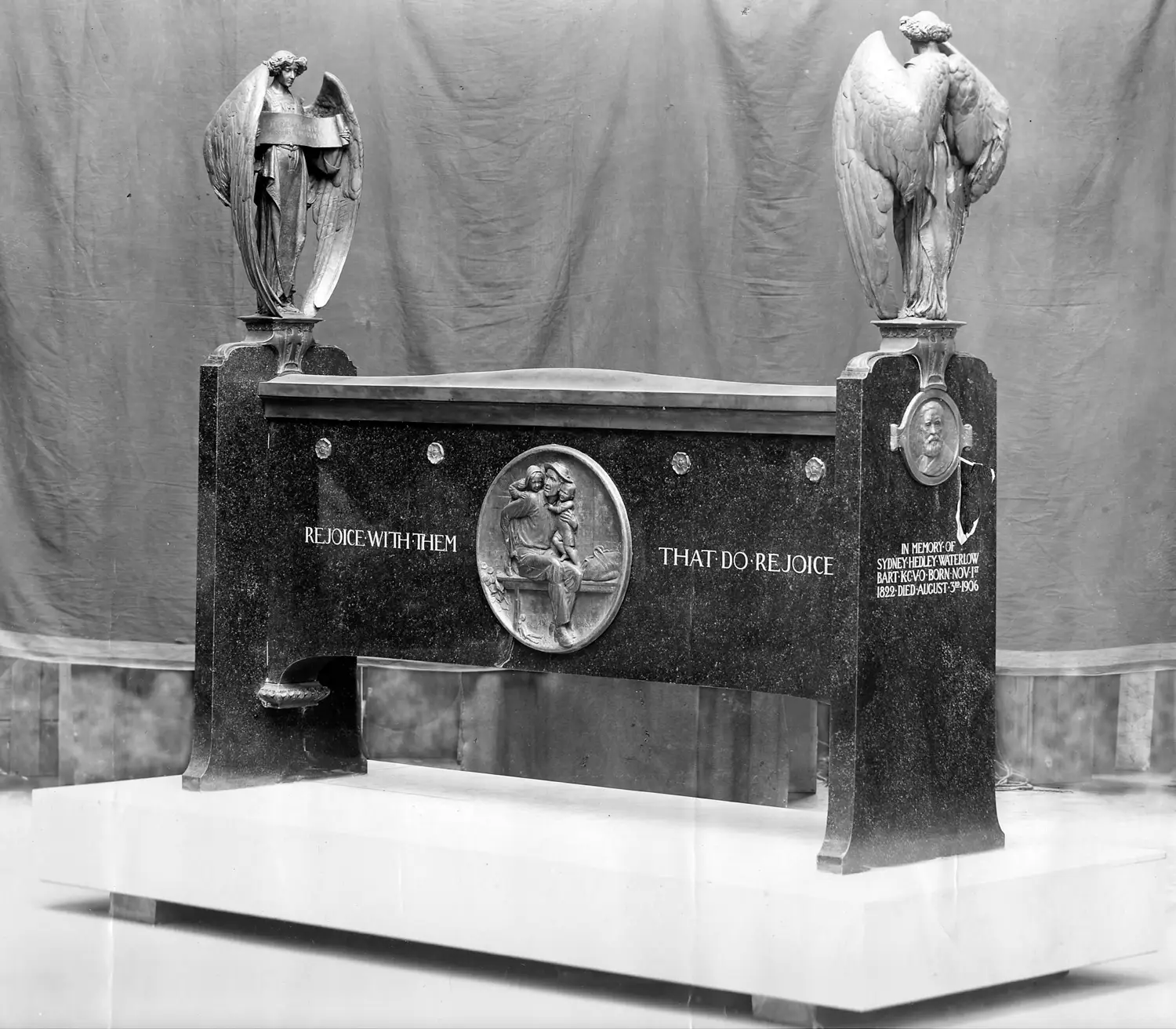
Sir Sydney’s original memorial gravestone is pure Art Nouveau and was designed by Sir William Reynolds-Stevens, a leading sculptor and interior designer. It models the traditional practice of placing a person’s bed head over their grave. The Kent Archaeological Society describes the gravestone as follows:
“Black polished marble with a limestone kerbstone. On the west-facing side of the bedhead is a portrait in copper of Sydney Hedley Waterlow. On the north-facing end of the bedhead is the inscription ‘In memory of Sydney Hedley Waterlow Bart KCVO. Born Nov 1st 1822, died August 3rd 1906.’ On the east-facing side of the bed, the headboard features a circular copper sculpture of a carpenter seated on a bench, holding a bag of tools and his arms around a little girl and a boy. Also, 1 Tudor rose (3 missing) and “Weep with them that weep”, the roses represent mercy. There were also two angels at either end of the bed head, but these have been stolen”.
Regrettably, the gravestone has sustained significant damage from vandalism over the years; however, the headstone’s main base currently remains visible in the churchyard of St Mary’s Church. This area of the churchyard contains the graves of Sir Sydney, Agnes Hamilton (mother-in-law), Sir Philip (son) and his wife Laura (daughter-in-law).