
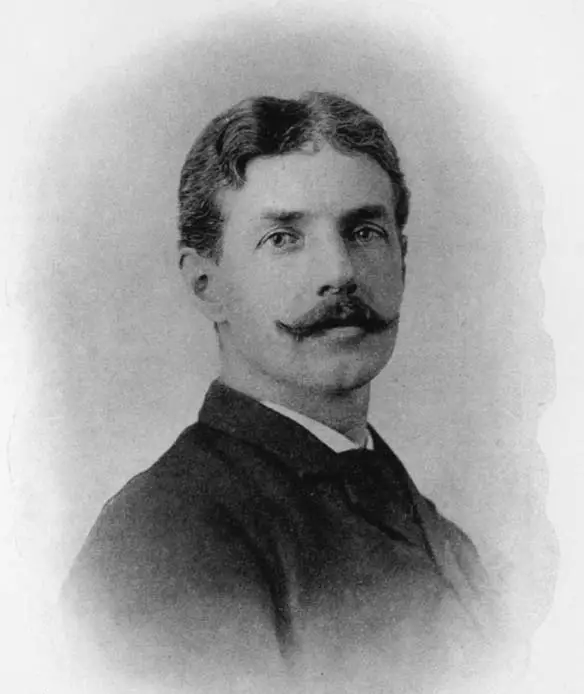
William Edward Hickson, commonly known as Richman Hopson and W. E. Hickson, was a British educational writer. He was the author of “Time and Faith” and was the editor of The Westminster Review between 1840 and 1852. He wrote part of the Official Peace Version of the British national anthem, approved by the Privy Council, found in the 1925 edition of Songs of Praise and, with one line changed, in the 1933 edition.
William was born in Westminster, London, on 7th January 1803, the son of William Hickson and Matilda née Underhill. His father was in the boot and shoe manufacturing trade, and he was their first child. He had four brothers, one of whom died as an infant, and two sisters. His younger sister, Anna Maria Hickson, later married Sir Sydney Waterlow, thereby establishing close ties between the Hickson family and the Waterlows.
In 1807, the whole family moved to Northampton, the centre of the UK footwear trade, and became active in the Baptist Church and in promoting Sunday Schools. His father was an early supporter of Joseph Lancaster, a Quaker and an early pioneer in educational access for the poor. As a seven-year-old, William attended a lecture by Lancaster in Northampton, and his father had helped found several ‘Lancasterian’ schools.
In 1812, his father founded William Hickson & Sons, and some years later, his son, William, joined the business. His father persuaded the Northampton shoe manufacturers to rent a London warehouse for the sale of their shoes, and he appointed William as manager. The warehouse was established at 20 Smithfield, but the joint venture proved unsuccessful. ‘Old William’, as he became known, ended up running the business as a private enterprise and became wealthy as a result.
The company manufactured footwear on-site and secured contracts to supply boots to the military. It was successful and continued in London until 1868, when the operation was relocated to 36 Woolmonger Street, Northampton, to reduce labour costs. A warehouse was opened from which leather components could be issued to workers for use in their own homes. Despite controversy in 1870 when it became public that the company was supplying footwear to Britain’s enemies, it continued to trade until 1910.
Young Hickson had been early involved in an innovative program, originated by John Turner, for sight-reading music as a means of improving the moral character of poor people. In 1826, aged 23, he was the editor of the first co-operative magazine published in England. He advocated the use of music in schools and wrote three songbooks for group singing. William married Jane Brown in Lambeth, London, on 15 September 1830, when he was 27, and she was 23. They were married for 40 years but had no children.
Whilst in London, he also found time to participate in the capital’s burgeoning literary and scientific life and to take an interest in radical politics. He was a founder member of the Reform Club and owned and edited the reforming magazine The Westminster Review for 11 years. He was most concerned with promoting education but was also prominent in discussions on child labour, the Corn Laws, professional malpractice and the condition of the unemployed. He was a firm believer in the importance of musical education and in its ability to inculcate good behaviour through the singing of moral songs.
William married Jane Brown on 15 September 1830 when he was 27, and she was 23. They were married for 40 years but had no children. In order of birth, his siblings were: Samuel, who died in 1806 as an infant. Mathilda, who died in 1827 aged 22. Samuel, who married Ida Von Einem and had ten children. James, who married Sophia Hill and had seven children. After she died in 1850, he married Ida’s sister, Wilhelmine von Einem, and had six additional children. Mary, who did not marry and died in 1883. George, who married Ellen Waterlow and had nine children. Anna Maria, who married Sydney Waterlow in 1845 and had twelve children. William was therefore the uncle of 44 children.
In 1835, he assisted his friend Edwin Chadwick in an inquiry into the conditions of poor people “to secure information on the most improved methods of industrial training adopted for the children of paupers belonging to the industrial unions.”
Hickson is credited with popularising the proverb “If at first you don’t succeed, try, try, try again” in a children’s rhyme that he credits to himself in his The Singing Master (London, 1836), whose chorus begins:
‘Tis a lesson you should heed:
Try, try, try again.
If at first you don’t succeed,
Try, try, try again.
This rhyme was introduced to North America by the American educational reformer Thomas H. Palmer in his Teacher’s Manual (Boston, 1840).
Hickson’s well-known proverb featured in a 2017 video produced by the Premier League to support their Primary Stars programme. The campaign was backed by the National Literacy Trust and delivered through the Primary Stars literacy resources, inspiring 25,000 primary school children to write a poem about resilience.
Note: The video is available below this article.
The full version of Hickson’s poem is as follows:
It’s a lesson you should heed, try, try again.
If at first you don’t succeed, try, try again.
Then your courage should appear, for if you will persevere,
You will conquer, never fear, try, try again.
Once or twice, though, you should fail, try, try again.
If you would at last prevail, try, try again.
If we strive, ’tis no disgrace, Though we do not win the race;
What should you do in that case? try, try again.
If you find your task is hard, try, try again.
Time will bring you your reward, try, try again.
All that other folk can do, why, with patience, should not you?
Only keep this rule in view, try, try again.
William was a member of the Royal Commission of 1837 to inquire into the appalling conditions being experienced by unemployed handloom weavers in Great Britain and Ireland, and he threw himself with great zeal into the work, visiting all the principal locations of the industry. He returned a separate report in which he advocated the abolition of the Corn Laws and the introduction of a national education system. The Commissioners’ final joint report of 1841 reached very similar conclusions.
Note: The Corn Laws imposed tariffs on imported grain and thus ensured that prices were kept high even when there was a shortage of other food, e.g. potatoes, during the Great Famine in Ireland. The intention was to protect landowners and thus ensure the continuity of supply, but in practice, they caused much hardship. The Laws were finally repealed in 1846.
In the autumn of 1839, William made a tour of Holland, Belgium, and Northern Germany to study the national school systems of those countries. The results of his observations appeared in June 1840 in the Westminster Review (which he had just purchased).
Note: At the time of the Royal Commission, education in England was a hotch-potch of church schools, Sunday schools, private schools and ragged schools. About half of all children in the UK did not attend any school. The Elementary Education Act of 1870 established a formal system of national education for the first time.
He retired from William Hickson and Sons in 1840, aged 37, to devote himself to philanthropic and literary pursuits. Perhaps the major episode in Hickson’s life was as editor of the Westminster Review.
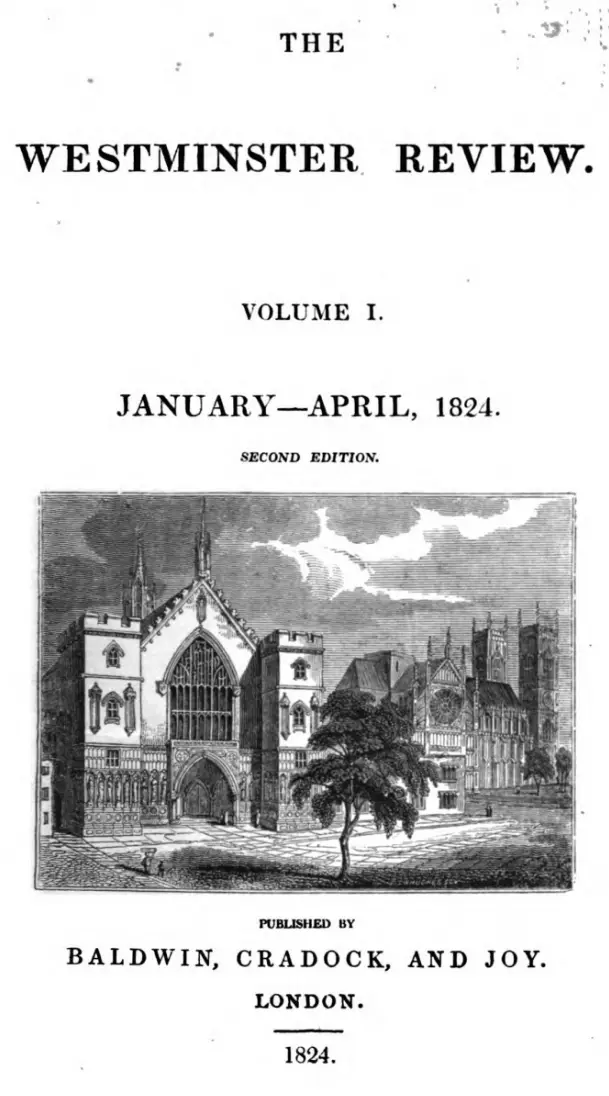
The Westminster Review was a quarterly periodical established in 1823 by Jeremy Bentham as the official publication of the Philosophical Radicals. The review quickly reached a circulation of 3,000, but it still did not break even financially. Hickson had been a regular contributor (without pay) when John Stuart Mill was editor and had submitted five or six articles on municipal reform, taxes on newspapers and fallacies in the poor laws. When the time came for a change in 1840, he was chosen to take over alongside Henry Cole, a postal system reformer and fierce advocate of maintaining accurate public records.
Note: The Philosophical Radicals were a group of British reformers in the early and mid-19th century who were inspired by Jeremy Bentham’s ideas. Their group included James Mill, Francis Place, George Grote, John Stuart Mill, and William Molesworth. Some of them entered Parliament to lobby for legislative reforms.
The 1840 issue opened with an article by William Makepeace Thackeray on George Cruikshank (a British caricaturist and book illustrator), while other articles ranged from the slave trade, the Canadian boundary question, and the role of Prince Albert. Most significant, in its portent for the future direction of the Review, was a long article by Hickson on “Dutch and German Schools.”
The Review continued to be a financial burden, leading Henry Cole to withdraw from joint ownership within months. Cole continued to write articles for the Review, but for the next eleven years, the full weight of editorship and ownership fell on Hickson. He was quite clear that it must be devoted to the reform of society, through legislation in the short term, and by education of the people in the long term.
Hickson was not inclined to compromise and sought to cut off what he saw as evil at its roots; he did indeed use the pages of the Westminster Review to promote his highly advanced opinions. Throughout his editorship, the Westminster Review championed, often combatively, such causes as reform of the law, abolition of taxes on knowledge, reform of the penal system and the poor laws, reform of sanitary and medical regulations, and reform of metropolitan government. But first and foremost, the review urged reform of education, proper education for the children of paupers and factory workers and improved education for the whole of England.
Though financial difficulties continued with relatively low circulation figures, Mill concluded on the period of Hickson’s ownership that “it is highly creditable to him that he was able to maintain, to some tolerable degree, the character of the Review as an organ of radicalism and progress.” To compound the Review’s financial troubles, in late December 1850, Hickson discovered alarming discrepancies in the accounts of his publisher, George Luxford. Hickson wrote, “Luxford has been robbing me”. His defalcations turn out to be very serious. “I had recovered from his clutches 200 pounds, about half what I had lost.” As a result, Hickson decided to transfer the publishing to Groombridge and Sons and to set up a separate printing arrangement with his brother-in-law, Sir Sydney Waterlow, of Waterlow and Sons.
When Hickson decided, at the end of 1851, to part with the Review, Mill wrote to him saying, “I shall regret much if the Review passes out of your hands into those of anyone who would have no object but to endeavour to make it profitable. It is the only organ through which really advanced opinions can get access to the public, and it is very honourable to you that you have kept that organ in life and at work for ten years past and have made it so good a thing under difficult circumstances, as you have.” Hickson had kept the faith.
Note: The Westminster Review continued under the ownership of John Chapman for the next 43 years and eventually ceased publication in 1914.
There were links between the Hicksons and three other families, all of whom had strong connections to Fairseat.
- The Waterlow family: William’s youngest sister, Anna Maria, who was 21 years younger than him, married Sir Sydney Waterlow, who, after her death in 1880, built Trosley Towers. His youngest brother (George) married Ellen Celia Waterlow (Sir Sydney’s sister).
- The Von Einem family: His other two brothers (Samuel and James) married sisters from the Von Einem family (Ida and Wilhelmine), both of whom were members of the Prussian nobility.
- The Grant family: One of William’s cousins, Samuel Hickson, married Jane Grant in about 1832. Jane’s parents were Scottish, David Grant and Elisabeth nee Maullin, and she had four sisters (one of whom, it seems, died as an infant). Her remaining three sisters were: Helen, who married Samuel Adams in 1846. Hannah, who remained unmarried and ran a boarding school for girls in Fairseat from 1835 to 1858. Elizabeth, who married William’s father (following the death of William’s mother, Matilda, in 1847).
In 1839, ‘Old William’ sold land to Horace Grant, who subsequently built Fairseat House as a boarding school and Fairseat Cottage (now Court House) as a house for himself. Horace was the cousin of the three Grant sisters. His father was Andrew (David Grant’s brother), and his mother was Mary Maullin (Elisabeth Maullin’s sister).
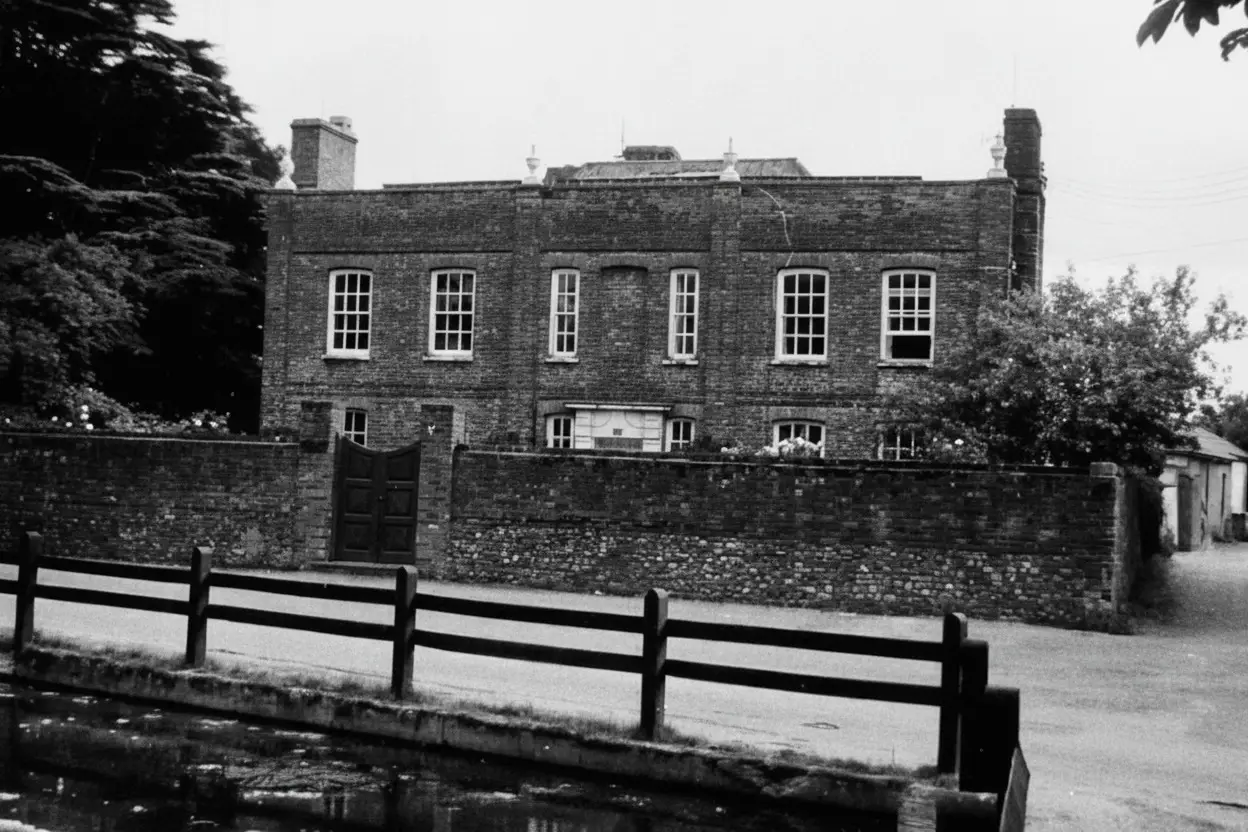
The Hicksons’ records in Fairseat are much less precise than those for other aspects of their lives. It is not known when “Old William’ first moved to Fairseat, but he was included in the Poll Book for Stansted in 1837 and was undoubtedly a landowner in 1839 because in that year he sold part of his estate to Horace Grant. There is a record of William Hickson, Boot and Shoe Manufacturer, living in Rochester in 1824, so it was some time after that.
There is a reference that after his father retired from the boot and shoe trade (date unknown), he devoted his time and fortune to founding a utopian, cooperative farming experiment on his estate at Fairseat, which also included a variety of schemes for educating the poor, attracting much attention at the time from such observers as Thomas Carlyle and John Stuart Mill. The earliest record of William Edward living in Fairseat dates to 1847, when he is listed in the Electoral Register for Stansted as residing at Fairseat Manor House. His father is also listed as living in Fairseat.
William’s father died on 18th June 1857 whilst living at his property at 14 Ely Place, Holborn, London, and he is in the 1851 census at the same address. The entire street is notable for having belonged to the Bishops of Ely and for being officially part of Cambridgeshire. He left all his property in trust to his 2nd, 3rd and 4th sons, Samuel, James and George. To his oldest son, William, he left a meadow adjacent to an orchard in Hertford, and to his wife, an annuity of £250 a year. In a codicil to his Will, he left his real estate in Fairseat to Sydney Waterlow, the husband of his daughter. This was subject to a mortgage to his son William and to William Harvey. From a later conveyance of Fairseat House, it appears that Old William had received a loan of £3,000 in 1851, which was secured on his land in Fairseat. The loan was from two parties. 1: Sir Sydney Waterlow; and 2: William Edward Hickson and William Harvey.
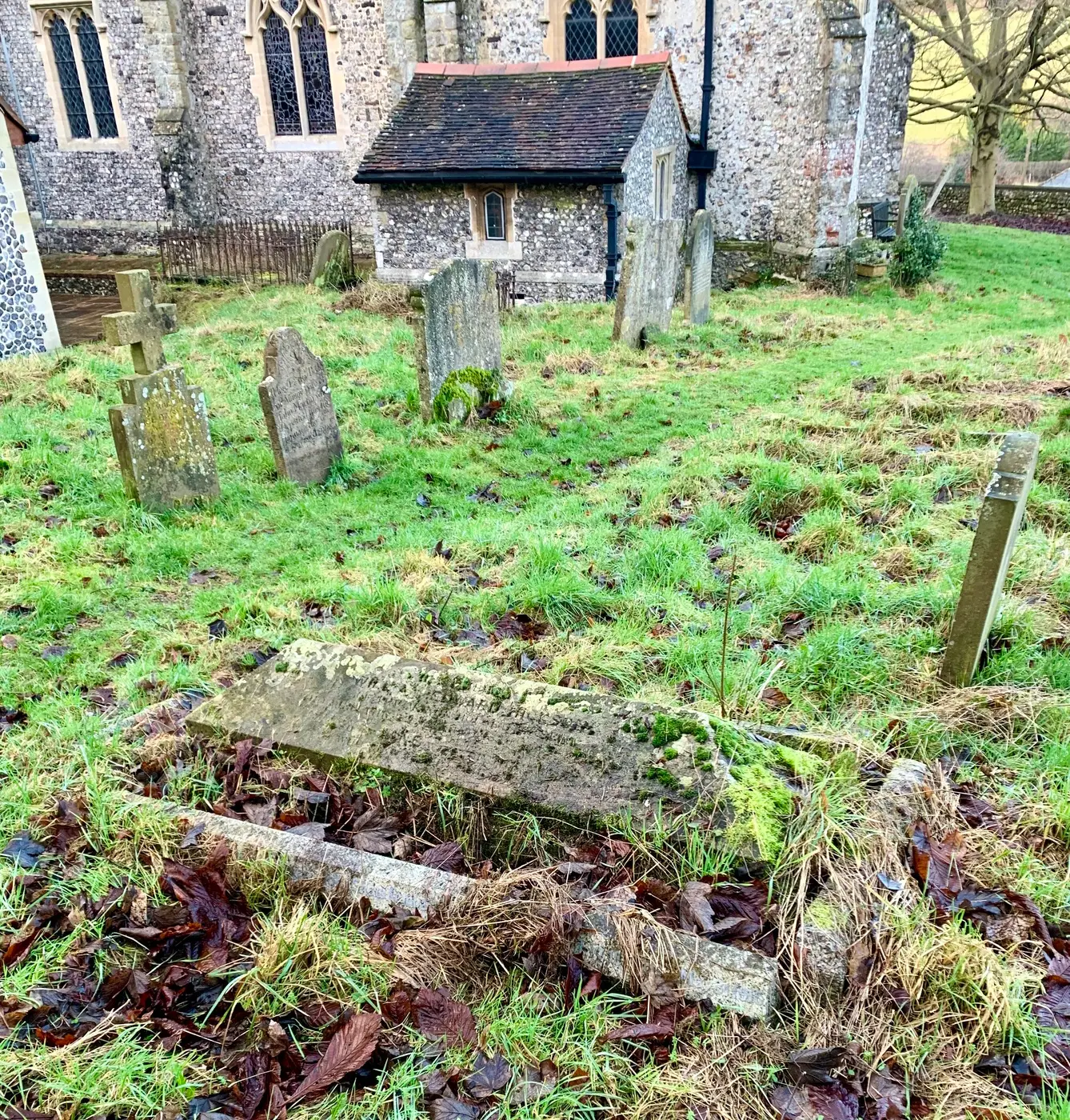
William, who had suffered from asthma for many years, died at his home, Fairseat Manor, on 22 March 1870, aged 67. His wife, Jane, died just nine months later, aged 65. Both are buried in St Mary’s churchyard, Stansted, Kent. William’s grave was relocated during the construction of The Cloisters and is now about 20 metres from its original location.
William was also very specific in his will about his funeral. He said, “It is my desire that wherever I die, my body may be buried in the nearest cemetery or country churchyard to the place of my decease. That my grave may be a plain one of not more than eight feet deep and without brick or stonework of any kind, that no monument or tombstone be erected to mark the spot favouring the delusion that the mysterious ego of my being could lie confined there, it is certain of even the corporeal frame that the essential elements by which that frame is knitted together are too subtle and volatile for long imprisonment in any receptacle we can provide for them. I desire this not from indifference to Religion, for I believe that there are solemn truths at the bottom of all systems of human faith, but because I do not accept nor hold myself accountable for the errors of tradition in fact and doctrine often mixed up with funeral ceremonies”.
Following William’s death, the 1871 Census shows William’s brother James living at Fairseat Manor House with his wife, Wilhelmina and their three daughters. William’s other siblings were all living in London. There were also three Hicksons living in Fairseat House on the day of the 1871 census: Beatrice and Frederick (two children of his brother Samuel) and Celia (a daughter of his brother George).
In 1875, a diary by Ernest Hickson (George Hickson’s son) described a weekend visit to Fairseat and mentioned that Aunts Anna and Ida were both living in the Fairseat area. There is no record of their residence in Fairseat. Aunt Anna died in 1880 in the South of France, and the 1881 Census records Aunt Ida as living in Highgate. His brother-in-law, Sydney Waterlow, purchased large areas of land in Fairseat in 1880 and began construction of Trosley Towers, which was completed in 1887.