
Origins
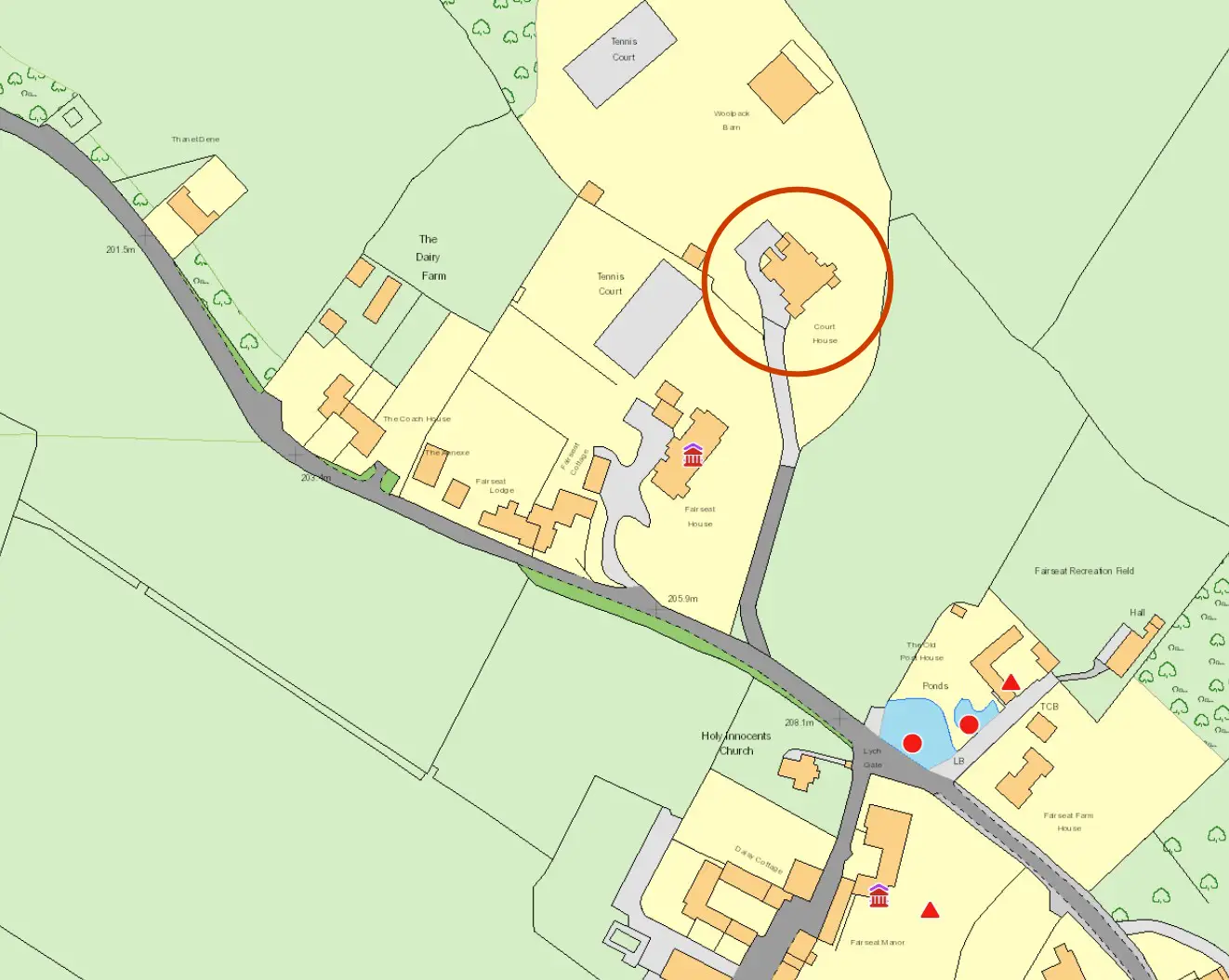
Around the 1830s, William Hickson of Fairseat Manor is believed to have sold a portion of the manor’s farmland to Horace Grant. This land was where Fairseat House was to be built. In 1840, Horace leased about 1½ additional acres in Maiden Field, apparently as a preliminary step toward a freehold conveyance. The subsequent conveyance remains unidentified. This land was likely acquired to site a new residence for Horace, The Cottage (later Court House).
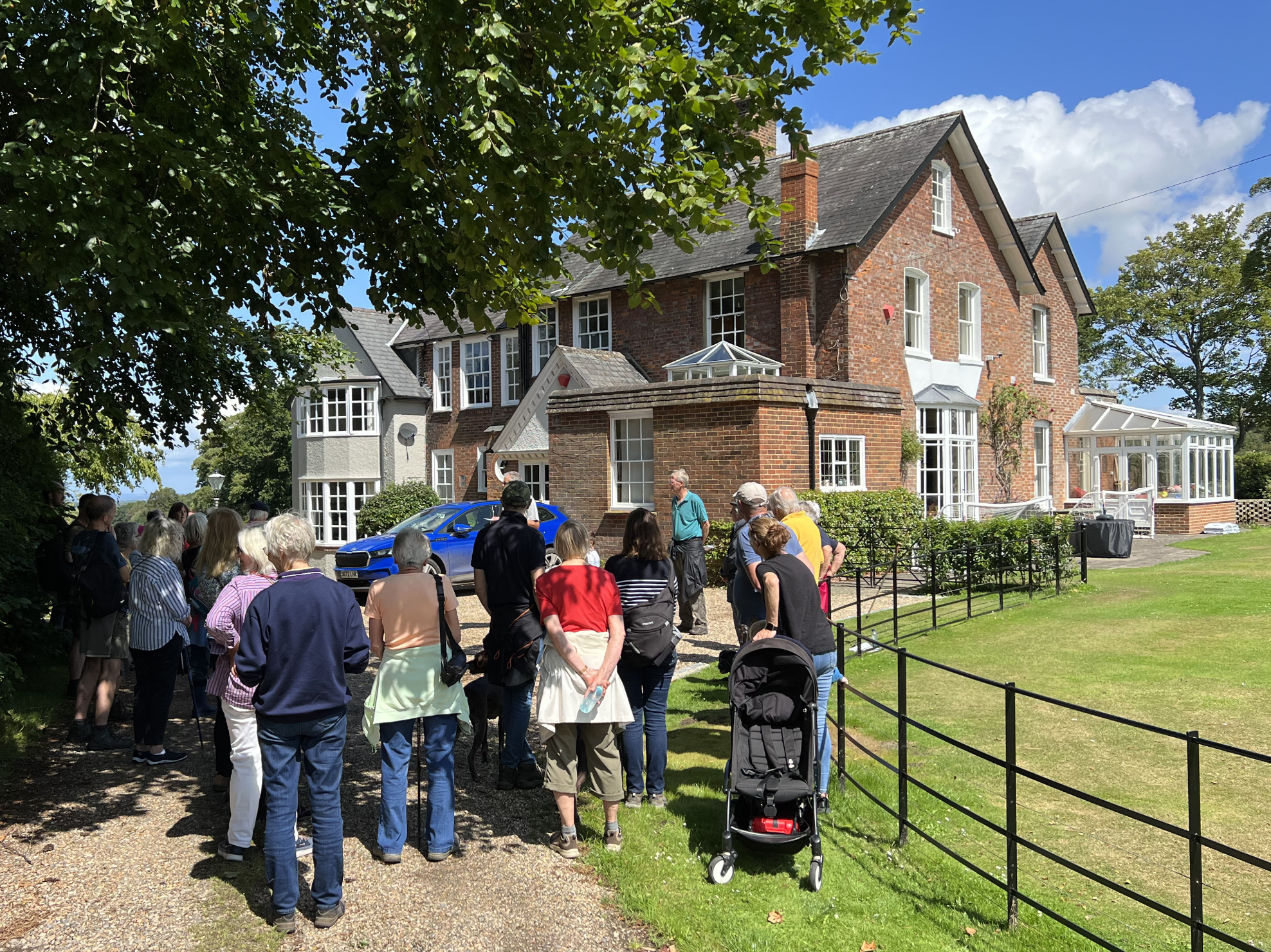
Known as ‘The Cottage’ before World War II, the house was built by Horace Grant in the 1840s, after he built Fairseat House in the 1830s. Horace Grant (1799–1859) was a prominent 19th-century British educational writer and an official correspondent for the East India Company. He is best known for his pioneering series of educational textbooks written for young children. He worked for many years in the East India Company’s home administration, managing official correspondence. This role placed him in the same professional circles as other prominent intellectual figures of the era, most notably John Stuart Mill, the English philosopher, political economist, and MP.
Horace’s interest in education may have contributed to the construction of Fairseat House, which included a block with substantial living accommodation for a potential school. While the exact dates are still unconfirmed, Horace’s cousin, Hannah Grant, ran the property as a school for young ladies from 1839 to 1872, when it closed. The 1851 census records some 52 girls in residence at Fairseat House.
William Hickson Snr’s son was also called William (William Edward) and lived in Fairseat. In his will, dated 1862, he left 10 guineas and the following note: “To the owner of the Cottage at Fairseat, built by my late friend Horace Grant, for the erection of ornamental chimney pots in place of the one ugly red pot by which the principal chimney stack of the said Cottage is now disfigured.”
William clearly cared about the chimney’s aesthetics! There is no sign of the ugly stack these days, so they must have replaced it around that time.
Horace is commemorated on a mounted brass plaque in St. Mary’s Church, Stansted. The plaque contains the following inscription:
“In this churchyard rests the body of Horace Grant of Fairseat. Late of the East India House. Author of exercises for the senses & other educational works. Born MDCCXCIX. Died March MDCCCLIX. This memorial is erected by a few of those to whom he greatly endeared himself by the self-denying kindness with which he voluntarily devoted himself to their instruction and improvement and in affectionate remembrance of the constant and friendly sympathy he manifested in all their undertakings”.
After Horace Grant’s death, the 1861 census records Hannah Grant occupying The Cottage with her sister, Elizabeth Hickson. Hannah Grant died in 1887 aged 78 and is commemorated on a brass wall plaque in St. Mary’s Church, Stansted. The plaque contains the following inscription:
“In memory of HANNAH GRANT, the beloved mistress of Fairseat School. She died on the 18th February 1887, aged 78 years, and is buried near this place. Her life was a rare example of untiring devotion to duty, of earnest liberal faith, of unselfish & judicious well-doing. In her 33 years of strenuous work in the gracious and generous leisure of her quiet old age, she was always the wise counsellor, the trusted comforter of all who sought her sympathy. The affectionate reverence which she inspired in upwards of 500 pupils is here gratefully recorded by some of them”.
The 1871 Census records the occupants as Laura Scott, née Hill, a 38-year-old widow and annuitant, together with her 10-year-old daughter Bertha and her sons Arthur, 12, and Harold, 5. The census records Laura’s name incorrectly as Louisa. Also living there were 11-year-old Anne Hill, Laura’s niece, and 3 domestic staff: a cook, a housemaid, and a general servant for indoor work. Laura’s husband, Edward, was an Attorney-at-Law and had died 5 years before, in 1866. He had been married before and had a daughter, Anne ‘Annie’. Annie married Laura’s brother, George, who was a celebrated author. Their children included Sir Leonard Erskine Hill, who was a famous medical researcher who, together with his son, proved the link between smoking and cancer.
Suffice it to say that the Scott and Hill families were highly distinguished in many fields. Laura moved from Fairseat to Hastings shortly after 1871; three years later, in October 1874, Debenham, Tewson & Farmer, Cheapside, London, offered Fairseat House and The Cottage for sale in two lots at auction. The Cottage is described as a desirable residence, having a carriage drive approach and containing six bedrooms, drawing room (24ft by 18ft), dining room (18ft by 14ft), offices, a coach house and stabling for two horses, pleasure and kitchen gardens, in all 2 Roods and 28 Perches. Note: this area equates to about 0.7 acres.
The purchaser of The Cottage at the October 1874 auction has not yet been established by a conveyance, contract, or other title document. The present evidence nevertheless makes Charles Leonard Nutter and his wife, Anna Maria Nutter, the most probable candidates.
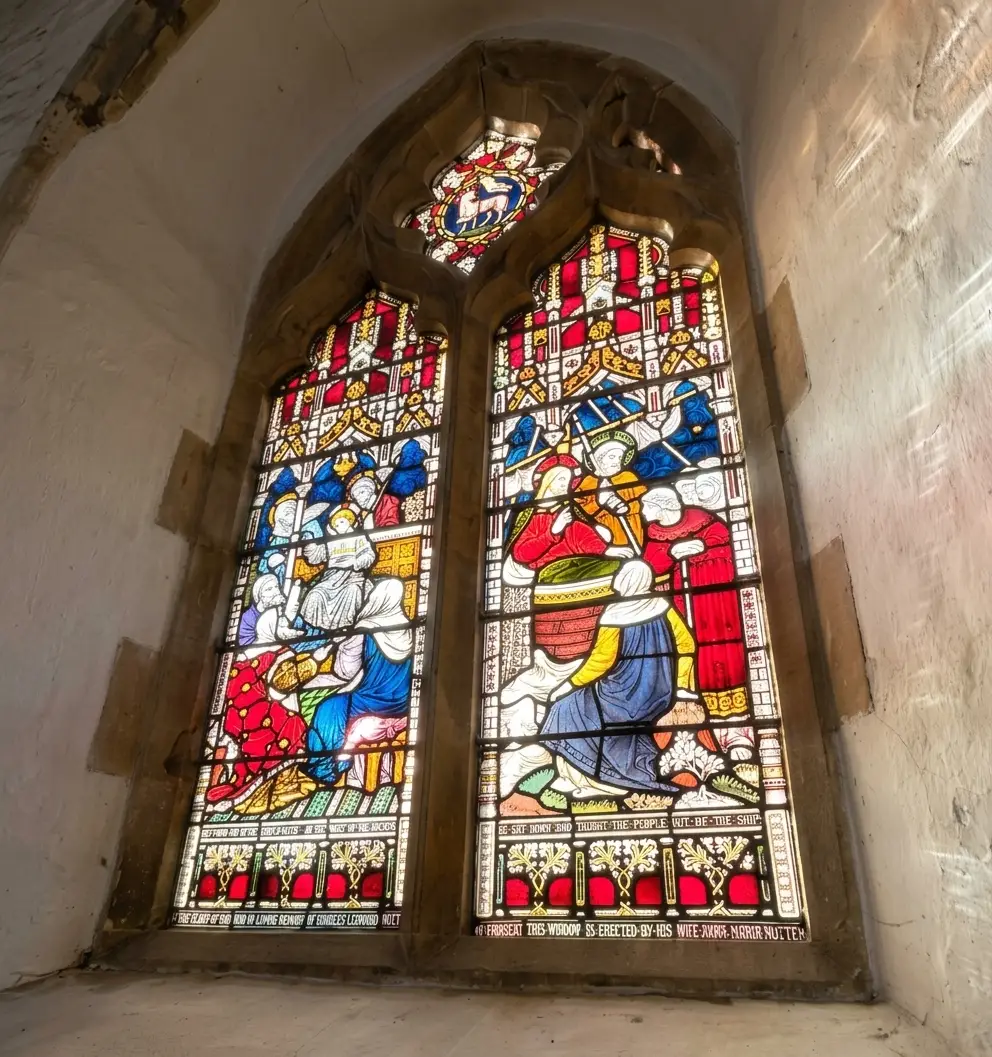
The 1881 census records a 39-year-old widow, Anne Nutter, with her daughter Helen, three visitors and two servants in the household. This suggests that the Nutter household occupied the property shortly after the auction. The stained-glass window in St Mary’s, which commemorates “Charles Leonard Nutter of Fairseat” and states that his wife, Anna Maria Nutter, erected it, strengthens this identification. “Anne” in the census is therefore very likely Anna Maria. The parish register records Charles Leonard Nutter, aged 39, as dying at Boulogne-sur-Mer and being buried at Burton-in-Kendal in early 1881; genealogy records place his death in late December 1880. His widow was therefore the head of household on the census day.
Charles and Anna Maria Nutter probably occupied The Cottage before Charles’s death, and Charles may well have bought it at, or immediately after, the 1874 auction. The timing, the size of the 1881 household and the permanent church memorial all support this interpretation.
The 1891 Census is ambiguous in that Court House is not mentioned by name, and there are two possible alternative families that could have been at the premises: Frederick and Constance McDermott and their 3 children (Kathleen, Walter, Constance), 2 Governesses and 3 domestic staff; or Louisa Stevenson, who was a widow and her daughter Elizabeth Gordon and 2 domestic staff.
20th Century
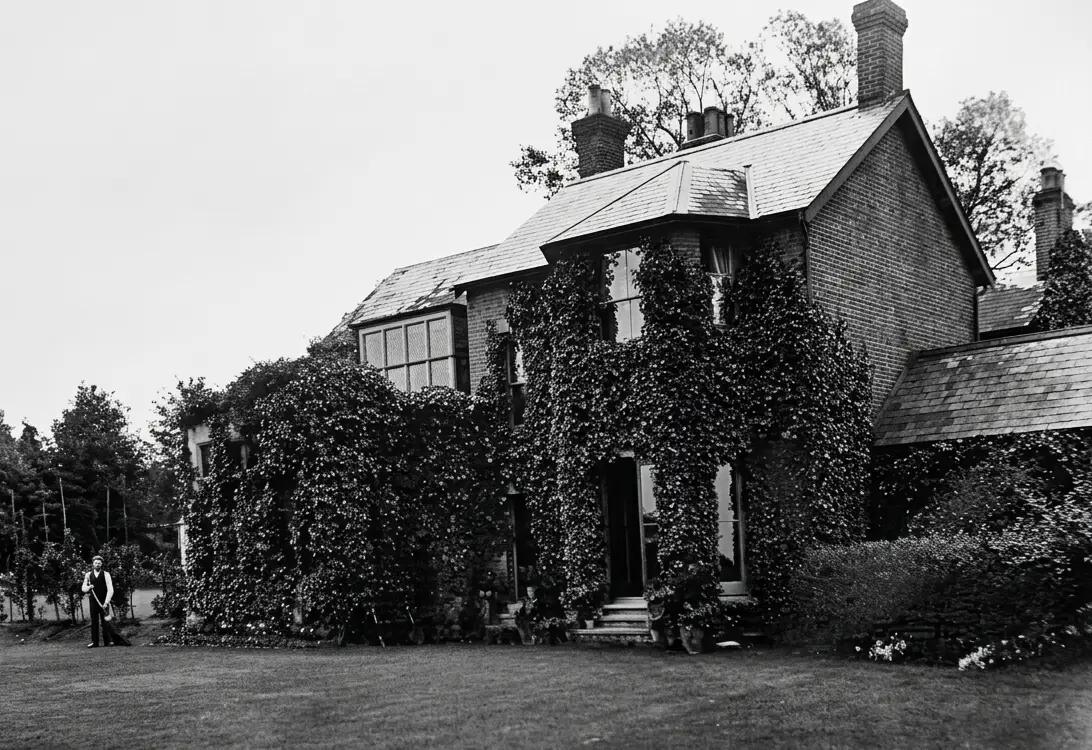
The next definitive change in ownership of ‘The Cottage’ appears in the 1901 census, which lists William Drummond and his wife, Jessie, as residents. William Drummond was a captain in the 3rd Battalion of the New Hampshire Regiment and, upon retiring from the army in 1887, received a retirement promotion to Major.
Major Drummond added the extension on the North side of The Cottage. In retirement, he was an amateur artist, and the first floor of ‘The Cottage’ has a large north-facing window that provided the best light for an artist’s studio. The extension, together with the flat that replaced the old stable and a small amount of infill, is what is now a separate attached property, ‘The Courtyard’.
William Charles Drummond died in January 1916, and the 1921 census confirms that his widow, Jessie Drummond, continued to reside at The Cottage. Major Drummond’s life is commemorated on an alabaster wall plaque in St Mary’s Church, Stansted. The plaque contains the following inscription:
“To the loving memory of William Charles Drummond, late of the Derbyshire Regiment and Hampshire Militia. Died at Fairseat January 14, 1916. Until the daybreak and the shadows flee away”.
Note: William’s biography is available in the People section under Biographies. William Hammond Biography
A Conveyance dated 10 September 1926 confirms that Beresford Charles Scott (1872 – 1931) purchased ‘The Cottage’ and lived there together with his wife, Olga de Bretton Scott, nee Olga de Bretton Priestley (1877 – 1965). The sale to Beresford Scott seems to have been by codicil to a Will upon the death of Major Drummond’s widow, Jessie Marie Drummond. Beresford Scott died in 1931, and the Register of Electors suggests his wife, Olga, continued living at The Cottage. No link has been found between Beresford Scott and Laura Scott, who lived here in 1871.
In 1939, Herbert Greenfield purchased ‘The Cottage’ and lived there with his wife, Dorothy. Lieutenant-Colonel Herbert Greenfield, OBE, MRCVS, was a British Army veterinary officer. He served in the Army Veterinary Corps, later the Royal Army Veterinary Corps, and would have been responsible for the health and treatment of military animals, particularly horses. Horses remained essential for transport, artillery, and cavalry during the First World War. He published a 1940 paper on inflammatory eye disease in wartime animals.
He also served as Services Secretary of the Talbot House charity and was friends with its founder, the Reverend Philip “Tubby” Clayton.
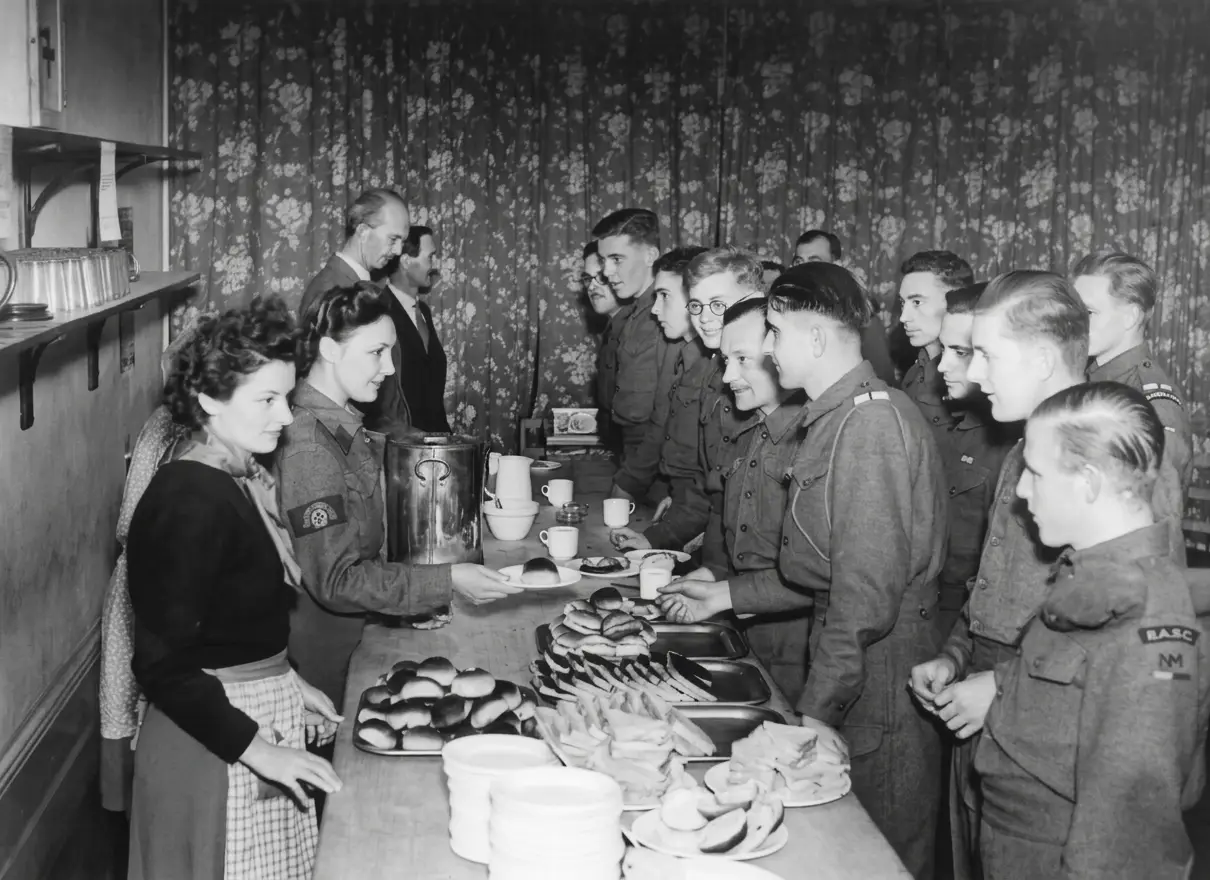
During World War 2 Court House operated as a TOC H (Talbot House Charity) club for soldiers, including a canteen, library, and recreation facilities. Many ex-service personnel remember ‘Fairseat Club’ as their refuge from the rigours of the Officer Cadet Training Unit at Wrotham Camp on the grounds of what was the Trosley Towers estate and would later become Vigo Village. Nearby Wrotham Hill Park also served as a local Toc-H centre.
Toc H is a registered charity and an international Christian movement. The name is an abbreviation for Talbot House. A soldiers’ rest-and-recreation centre named Talbot House was founded in December 1915 in Poperinghe, Belgium. It aimed to promote Christianity and was named in memory of Gilbert Talbot, son of Edward Talbot, then Bishop of Winchester, who had been killed at Hooge, Belgium, in July 1915.
Toc-H remains a charitable organisation to this day and works across the UK, building friendships that become partnerships and helping communities create safe, welcoming places where people can belong, grow, and thrive. Further information on the Toc-H charity is available on their website. Talbot House Charity.
During its time as a Toc-H venue, the Court House kitchen was on the ground floor of the Edwardian extension. The story goes that the cook said she would leave unless the kitchen was next to the dining room! As a result, an additional kitchen was added in 1942. Much later, when Tom Sheldon took ownership, it emerged that the kitchen roof had little reinforcement, likely due to the shortage of steel at the time. The issue was later solved by adding reinforced steel joists.
Various records up until 1940 show the property as being named ‘The Cottage’. It would appear that the property name was changed to ‘Court House’ sometime during or after World War 2. Who changed the house name, and when, is still to be determined.
Recent History
According to a conveyance dated 17 October 1954, John Rodney Clifford Sheldon purchased Court House from Philip Edmund Starr. No evidence of Philip Starr’s purchase of Court House has yet been found, but it is assumed he purchased the property from Herbert Greenfield after World War 2.
Rodney and his wife Pamela, together with their son Tom and Pam’s mother Gladys, moved from their first house in Loose, near Maistone, to occupy Court House. While living in Fairseat, Rodney ran paper mills in Snodland, producing soft loo paper, the first in the UK, and newsprint for The Times. He was MD of Aylesford Paper Mill, before later becoming MD of Townsend Hook Paper Mill. Rodney later joined the Board of News International with Rupert Murdoch until he retired in 1988.
In 1968 the owners of Fairseat Manor, Colonel and Mrs Anderson, both in their 80s, died within a week of each other. The estate was sold at auction, and Rodney and Pam Sheldon bought the buildings and land associated with Fairseat Farm. With no farming background, they set about restocking with a red-and-white Friesian herd; Pam preferred the colour to black and white! They later sold Fairseat Farmhouse to the former farm manager, Len Pointon, and he and his wife Kay converted part of it into a new Village Shop.
Rodney Sheldon died in November 2007, and his ashes are buried by a beech tree next to a memorial bench just off the footpath in the valley below Fairseat on the way to Coldharbour.
Note: Rodney’s biography is available in the ‘People’ section under ‘Biographies’.
Rodney Sheldon Biography
In the late 2000s, Georgie Sheldon, Tom and Julie Sheldon’s daughter, and her husband, Greg Whittaker, wanted to build their own family home, and in September 2018, planning consent was granted to convert an existing agricultural barn on the grounds of Court House into a separate residential dwelling, ‘Woolpack Barn’. The construction and renovation of the barn conversion was featured in the TV programme ‘Grand Designs’, and an article in Grand Designs Magazine was published in April 2021.
Grand Designs Magazine – Woolpack Barn
In 2021, Tom and Julie Sheldon felt that they no longer needed a large family home as a couple and set about creating ‘The Courtyard’ as a separate dwelling. The rooms were formerly part of the 1908 extension to the original Court House (The Cottage). Tom and Julie later moved into The Courtyard, and their daughter, Mimi Sheldon, and her family moved into Court House in July 2022.
Pam Sheldon continued living at Court House Farm, and Dick Hogbin interviewed Pam, together with her son, Tom Sheldon, on 19 February 2026. Pam sadly died a few months later in July 2026, and her ashes are now buried, with a newly planted Hornbeam tree, near the bench in Burlish field.
Note: A transcript of the interview with Pamela Sheldon is available in the ‘People’ section under ‘Recollections’.
Pam Sheldon Recollections