
Save the Black Horse
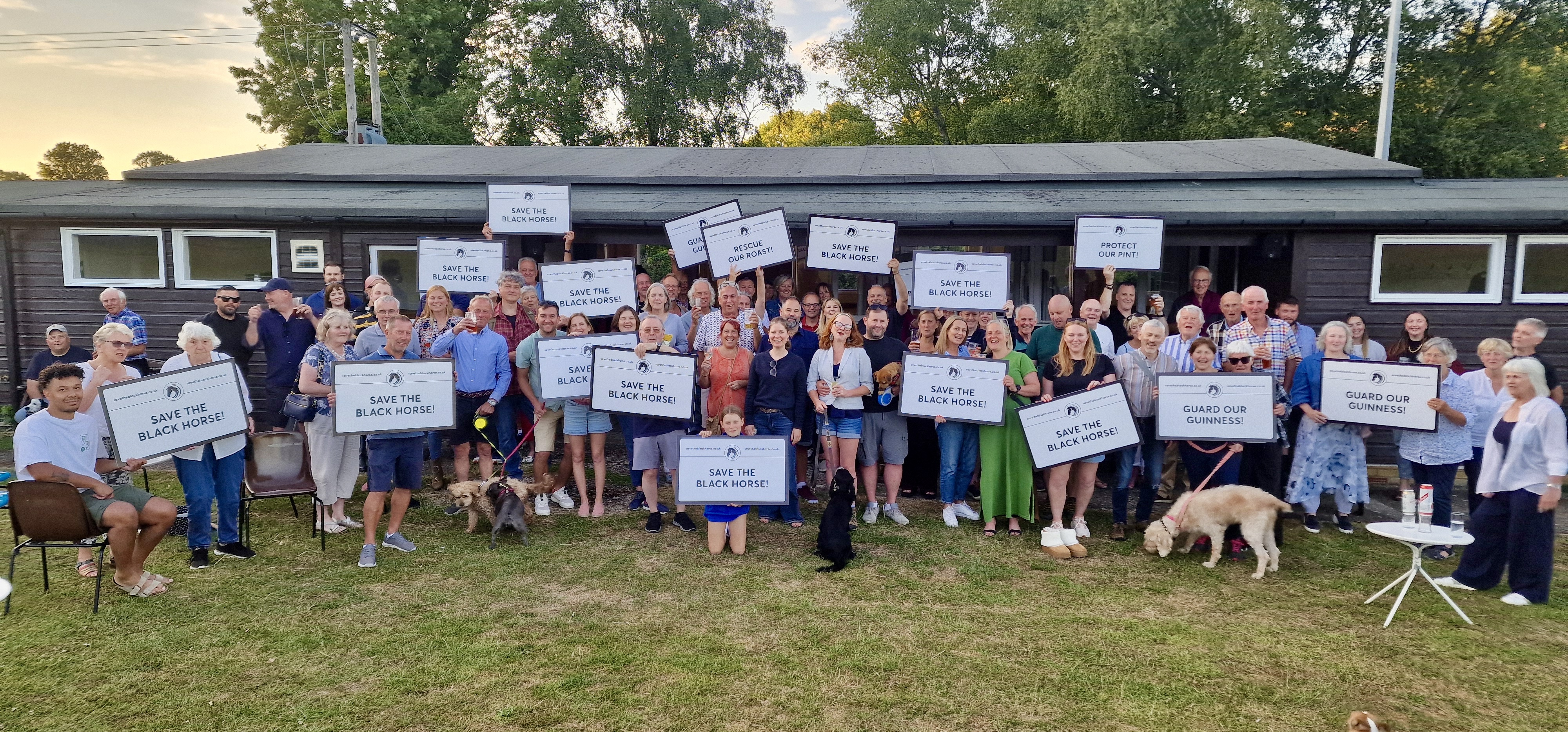
When the Black Horse closed in 2024, the community hoped that another owner or operator might be found to reopen the pub and preserve it as one of the Parish’s important social centres. The closure was sudden. The building and car park were abruptly closed off with Heras fencing and, within a relatively short period, the site became unkempt and an eyesore. There was a palpable sense of loss within the community at the disappearance of a place that had played an important part in village life for almost 200 years.
Not so long ago, there had been four public houses in the Parish:
- Vigo Inn – closed 2014
- Horse and Groom – closed 2016
- Anchor and Hope – closed 2018
With the closure of the Black Horse in 2024, there were none. It was not the owners’ fault that it was the last pub to close, but the loss was nevertheless deeply felt by the community.
The Save the Black Horse campaign
In response, the Parish Council took the lead in setting up and funding a Save the Black Horse sub-committee. The aim of the sub-committee was to explore whether the premises could be purchased and operated as a community-based pub.
At the same time, the owner was seeking to maximise the value of the property through planning applications for two separate developments: a change of use and residential conversion of part of the existing premises to three apartments (ref: 25/01596/FL), and a planning in principle application for the creation three houses in what had previously been the pub garden (ref: 26/00695/PIP).
The proposals attracted substantial opposition from the community, and both were refused on planning grounds. Meanwhile, the Parish Council made successive attempts to purchase the premises at what it considered to be a fair market value, taking account of the property’s existing use and condition. However, a significant difference existed between the asking price and the value reflected in the Parish Council’s offers, and no agreement could be reached.
Asset of Community Value
In anticipation of this, Stansted Parish Council had already applied for the Black Horse premises, including the building and garden, to be designated as an Asset of Community Value (ACV) by the District Council. The rationale was that the Black Horse is a popular venue for locals to socialise and congregate. The pub plays an important role during village events such as fetes and national celebrations, and it hosts regular quiz nights. Visitors, particularly those exploring the local area, also use the pub. Furthermore, The Black Horse is the only pub in the parish and is a local employer. This case was agreed, and ACV status was granted.
An ACV listing does not give the community an automatic right to buy the property, nor does it require an owner to accept a community offer. Its significance is that, when the owner intends to make a qualifying sale, eligible community organisations can trigger a period during which they can develop a bid and seek to purchase the property. During the relevant moratorium period, the owner is generally prevented from completing a sale to another buyer.
The first 6-month open sale moratorium expired without agreement on a sale/purchase, followed by a period during which the pub could be sold privately. After a second notification by the Parish Council that it intended to bid for the premises, a second sale moratorium period commenced, expiring on 16th January, 2027.
The ACV designation therefore remains an important part of the community’s efforts to retain the Black Horse as a community asset, although it does not guarantee that the premises will ultimately return to use as a pub. The pub’s designation as an ACV, and the reasons for the designation, are factors taken into account when considering any planning application.
Keeping the community together
To help focus the community’s views, the Group launched a poster. A series of ‘Save the Black Horse’ posters and banners were produced for people to display outside their houses. These sold out quickly, and many properties in both villages displayed them in a public show of support.
The Parish Council also sought to replace some of the social functions lost with the closure of the Black Horse by establishing a monthly Pop-up Pub, held on the last Friday of each month primarily at Stansted village hall but also at Fairseat village hall. These events proved very popular and demonstrated the continuing demand within the community for a regular place where people can meet, socialise and enjoy a drink together.
In late August 2026, the Group published an opportunity for the Community to pledge financial support.
The campaign remains part of the Black Horse’s continuing history, and its eventual outcome has yet to be determined.
The Project Steering Group comprises ten residents selected by Stansted Parish Council following a public meeting of 4 November 2024. The group is supported by Plunkett UK (the national charity for community-owned businesses), and has consulted with several successful community pub projects in Kent and beyond.
The Committee
The original membership of the Sub Committee included: Tom Sheldon (Chair), Yvonne Tisson (Parish Council), David Epps, Anna Epps, Gary Ibbott, Lee Durrant, Jon Rowe, Daisy Estrada, Jay Burlace and Jason Taylor. Additional members are: Simon Gardiner, Dick Hogbin (Parish Council), and Tim Emmerson.
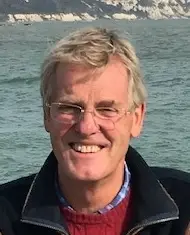
Tom Sheldon – Chair
Family moved to Fairseat in 1954. Retired Chartered Surveyor specialising in estate management, property development and valuation. Chaired the Steering Group that advised the Parish Council on the purchase of the former primary school, now Grange Park at Stansted school. Chaired the Steering Group that built the Cloisters, the extension to St Mary’s. Former PCC member and churchwarden. Acted as Chair and Project Manager for the installation of the new and reconditioned bells, the bell frame and ringers’ gallery at St Mary’s. Project managed the conversion of the vestry at the Church of the Holy Innocents Fairseat into a kitchen and toilet, including rewiring of the church and installing a new heating system.

Lee Durrant
Moved to Stansted with his family in 2012 after falling in love with the village, with The Black Horse a big part of that attraction. Lee jointly runs a software consultancy specialising in Enterprise Resource Planning systems, and draws on a background of management accountancy and software development to contribute technical and financial skills to the steering group.

Tim Emmerson
Came to Stansted in 2011 with his wife Francine and is now largely retired from a 40-year career as a London and New York based corporate finance lawyer. Tim and Francine strongly believe a revived Black Horse would deliver important benefits for the communities of both Stansted and Fairseat.

David Epps
Grew up in Sevenoaks and moved to Stansted in 2012. Married his wife Anna at Stansted Church in 2019, with the pre-wedding dinner held at The Black Horse. David has a background in management consultancy and is now Group Strategy and M&A Director at Amey, a large infrastructure services company. He brings strategy, communications and project management skills to the steering group, and is passionate about bringing The Black Horse back as the beating heart of the village.

Daisy Estrada
Daisy grew up in the Parish and moved back six years ago to raise her own family. She is a town planner specialising in urban design and heritage. She successfully led the response to the planning applications submitted by the owners of the Black Horse, helping to secure the refusal of both applications. She has spent her career working in local authority planning departments and now runs her own consultancy, Estrada Planning Ltd. She previously served as a Parish Councillor for Stansted and still advises the Parish on planning matters.
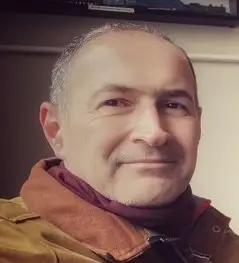
Simon Gardiner
A real estate lawyer practising in the City, Simon and his family moved to Fairseat in June 2023. On their first night, they walked through the fields and churchyard to Stansted to dine at the Black Horse, and it is a shame they are not able to do that now. Village pubs are well worth protecting.
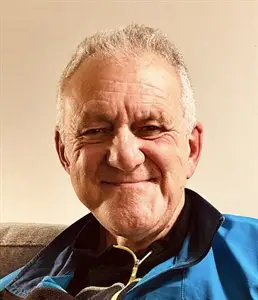
Dick Hogbin – Parish Councillor
Moved to Compass Cottage in Stansted with his wife, Jane, in 1993 and immediately joined the village cricket team which used the Black Horse after its matches. On the village hall committee 1995-2007. Currently Chair of the History Society, Vice Chair of the Parish Council and a Trustee of the Almshouses.

Gary Ibbott
Married his wife Sue at Stansted Church in 1988 and moved to Tumblefield Road, Stansted with their two children in 1998. Gary is a Chartered Certified Accountant and was Chief Financial Officer of an investment management business in London from 2001 to 2019, now retired. Having the Black Horse “down the road” was a key attraction when buying their house, and he is determined it is returned to its former glory for the benefit of the community.
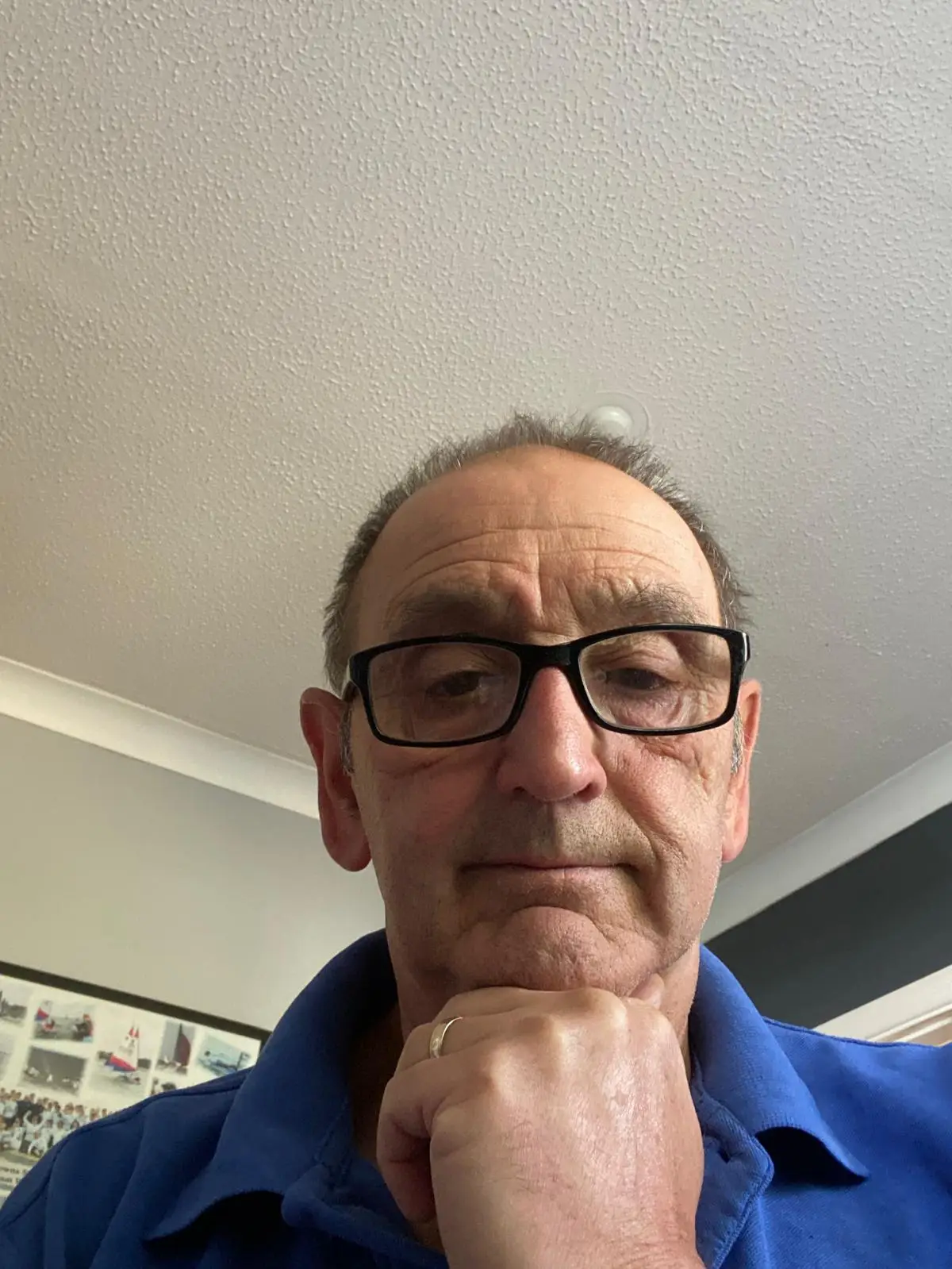
Jonathan Rowe
Had lived in a neighbouring parish for 40-plus years, being involved in many local events. Recently, 3 years ago, moved to Stansted and was welcomed by the community. Jonathan runs his own business and employs local people. He is passionate about keeping the pub open and ensuring it is owned and run by the community.
Yvonne Tisson – Parish Councillor
Has lived in Stansted since 1985. During that time, has been a member of the Parochial Church Council, Chair of the Stansted School PTA, Chair of Governors at Stansted School, Trustee and Treasurer of the Alms Houses and part of the team that purchased the village school from Kent County Council and Rochester Diocese. Currently Chair of Stansted Parish Council.
Author: Dick Hogbin
Editor: Tony Piper
Contributors: Tom Sheldon, Yvonne Tisson
References: www.savetheblackhorse.co.uk
Last Updated: 30 August 2026